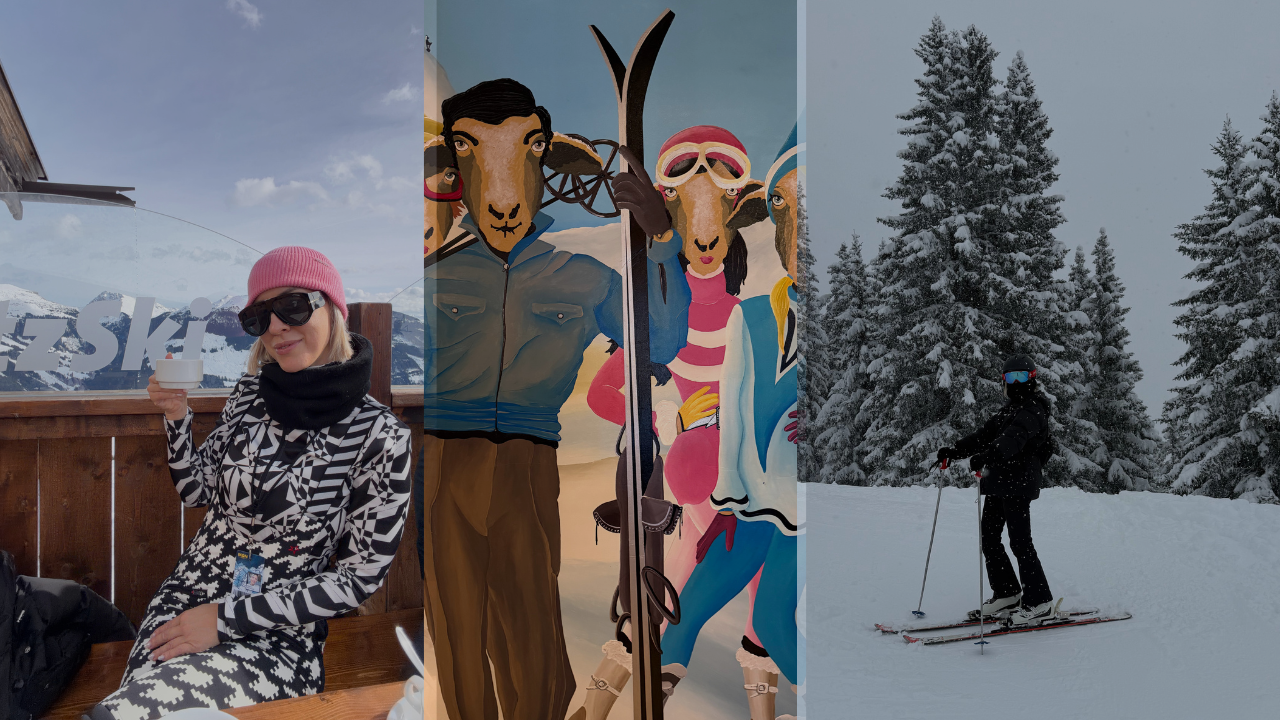
We just wrapped up a week in Kitzbühel, Austria, and I thought I’d share my full review along with some trip planning tips that would have helped me before going.
Kitzbühel is one of the most famous ski resorts in Europe and part of the Ikon Pass, which is why it had been on my ski list for a while. While the experience had some amazing moments, there were also things I wish I had known beforehand.
Here’s everything from getting there, where to stay, skiing conditions, the town vibe, and a day trip we took to Cortina, Italy.
Getting to Kitzbühel
Kitzbühel is very easy to reach from Munich Airport (MUC).
You have two main options:
- Drive: about 2 hours
- Train: about 2-2.5 hours with two transfers
The train route is actually very convenient. You can take the train directly from Munich Airport to Kitzbühel, and the train station in town is located right beside the Hahnenkammbahn A1 gondola. They basically share the same building, which is incredibly convenient for skiers.
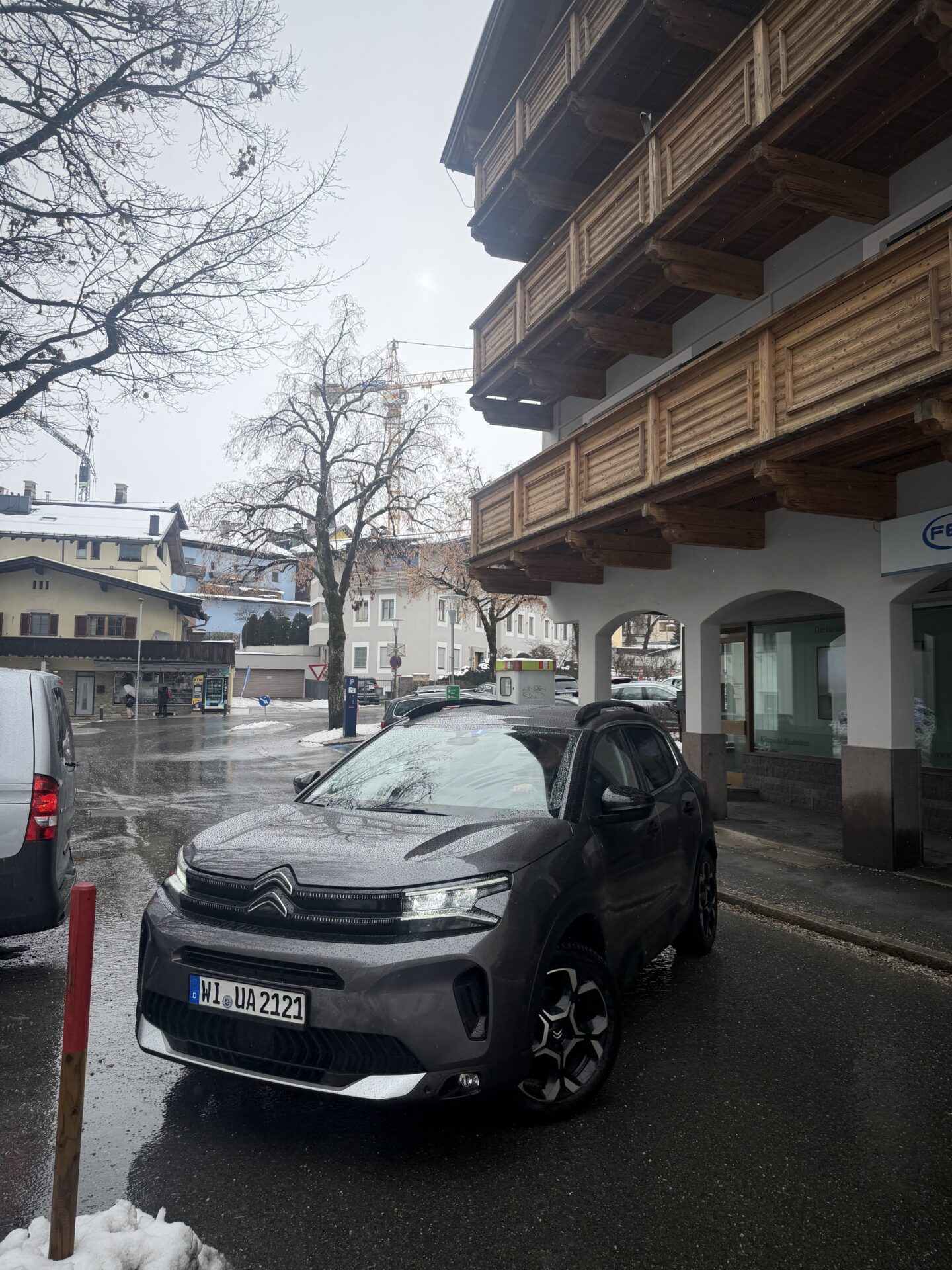
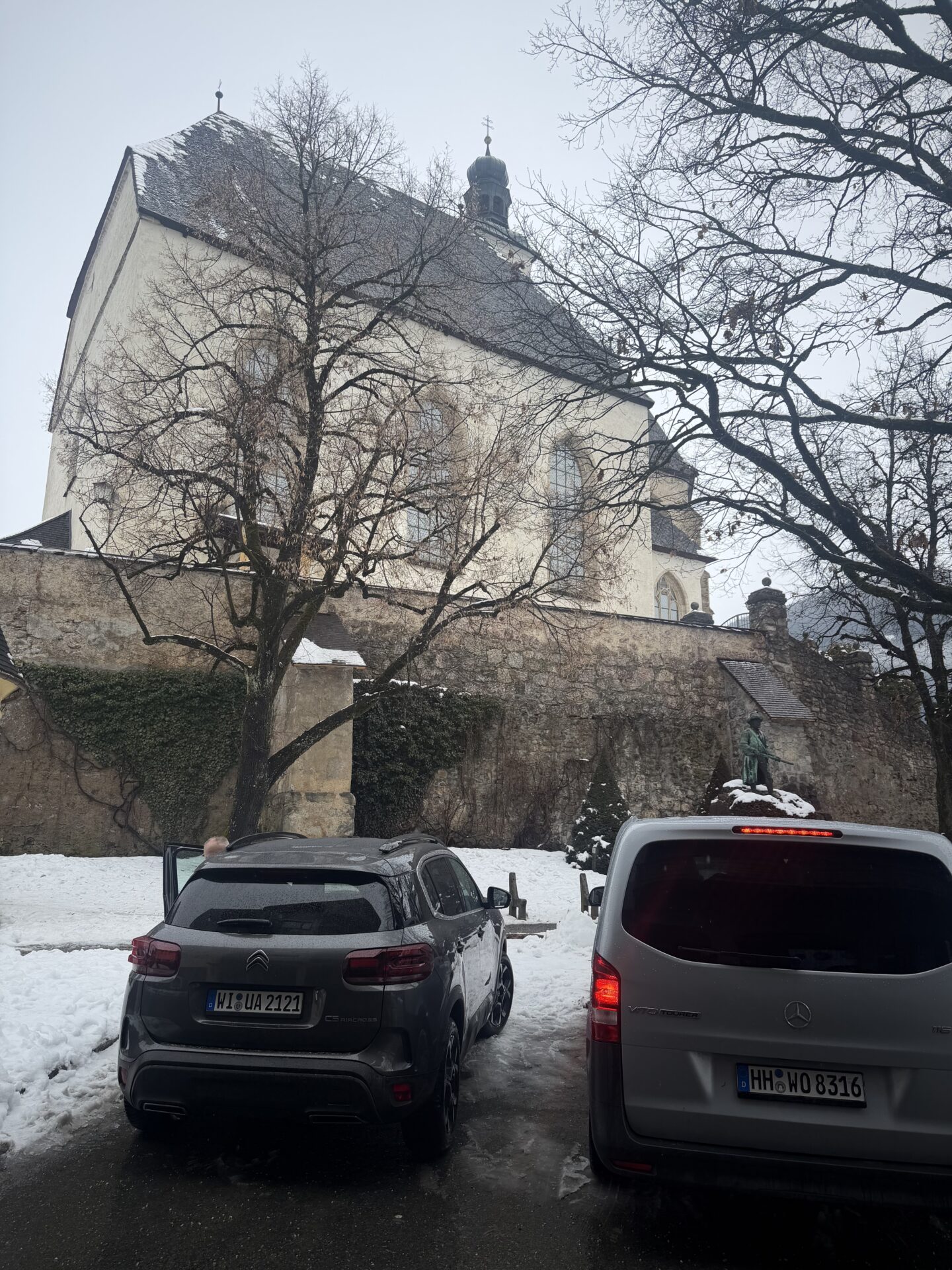
However, we decided to rent a car, which gave us more flexibility to explore nearby areas and also take a day trip into Italy.
Our car rental cost around $500 for six days, plus an additional $6 per day fee for crossing into another country.
Since we were driving in Austria, we also needed to purchase a vignette (highway toll pass). It cost about €15 for the week, and you can buy it either at gas stations or online through the ASFINAG app, which we used. Buying it through the app was very easy and convenient.
Where to Stay in Kitzbühel
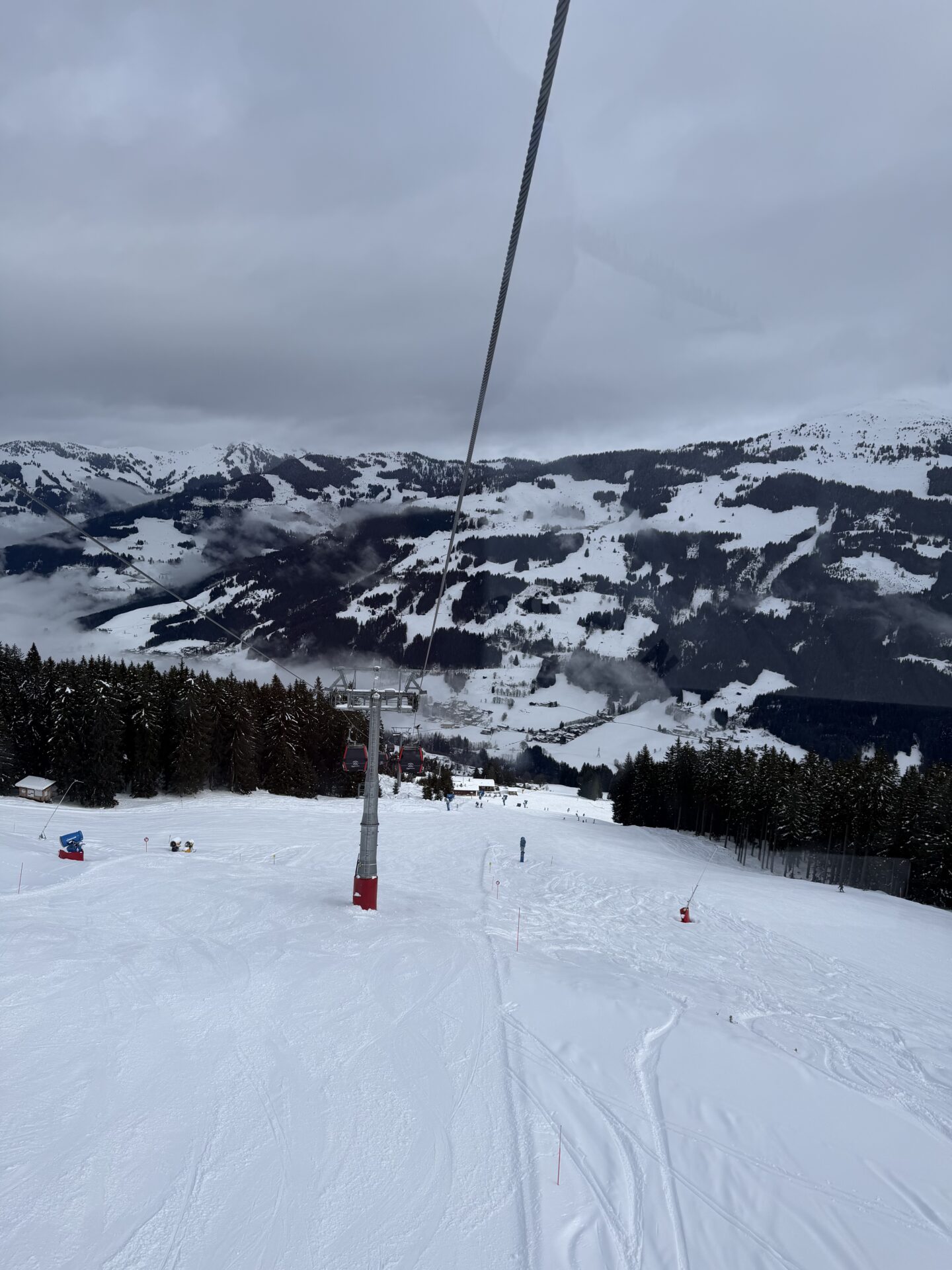
The KitzSki ski area (Kitzbühel–Kirchberg) is one of the largest and most famous ski regions in Austria. The resort connects seven municipalities across the Tyrol and Salzburg regions, creating a massive and well-connected ski network in the Kitzbüheler Alps.
The seven towns included in the KitzSki area are:
- Kitzbühel
- Kirchberg
- Jochberg
- Aurach
- Reith
- Hollersbach
- Pass Thurn–Mittersill
Together, this region offers approximately 233 kilometers (145 miles) of ski slopes and around 58 lifts, including modern gondolas, high-speed chairlifts, and beginner lifts.
One of the best parts of the resort is that most of the ski areas are connected, so you can start skiing in one town – for example Kirchberg – and ski all the way across the mountain range toward Mittersill or Pass Thurn in a single day if you plan your route properly.
The main access points most visitors use are:
- A1 Hahnenkammbahn Gondola – Kitzbühel
- B1 & B2 Gondolas – Kirchberg
- F1 Wagstättbahn – Jochberg
- G8 / Panoramabahn – Hollersbach / Mittersill
These gondolas act as the primary gateways into the KitzSki network and are connected by ski runs, lifts, and ski buses.
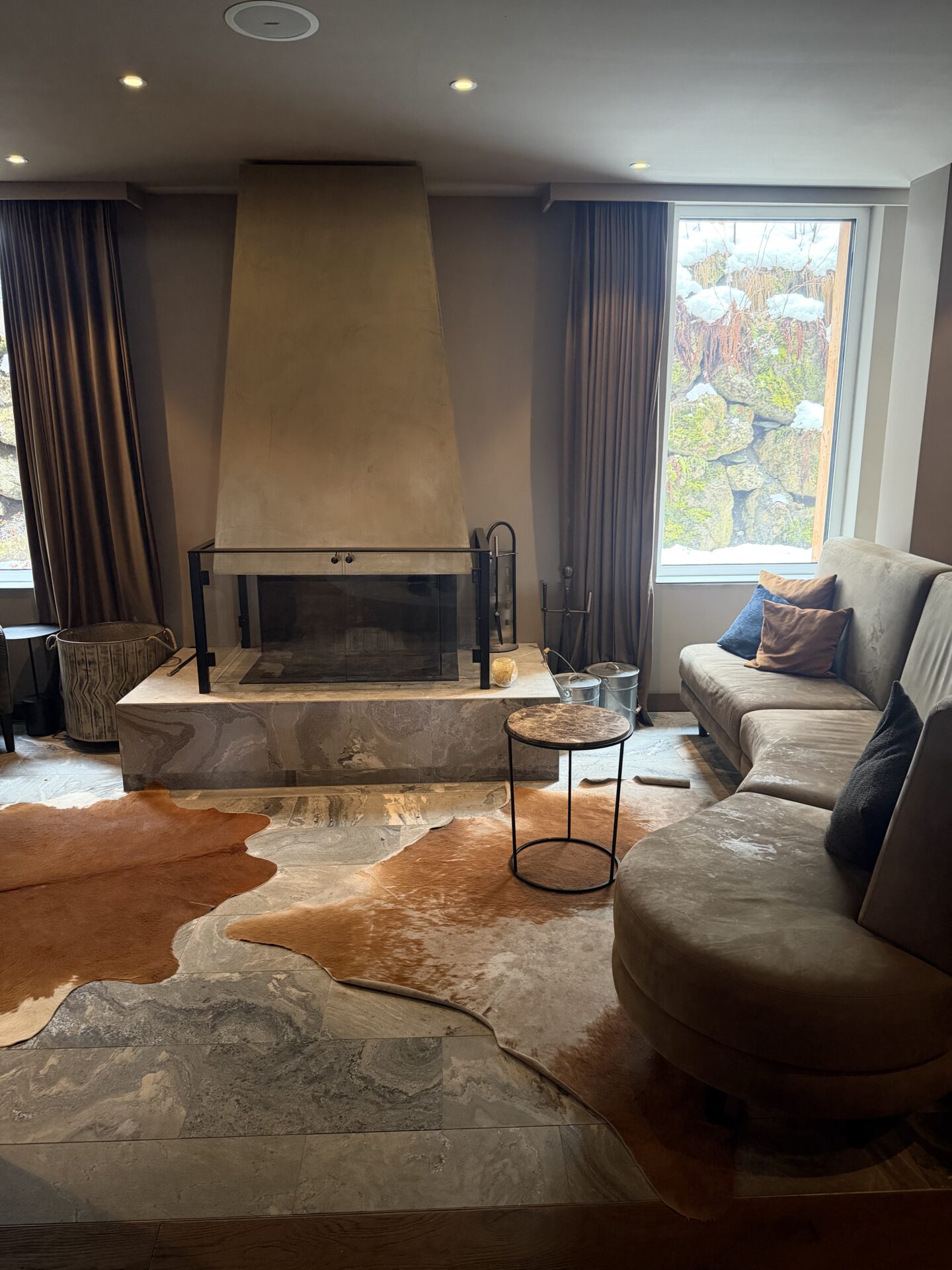
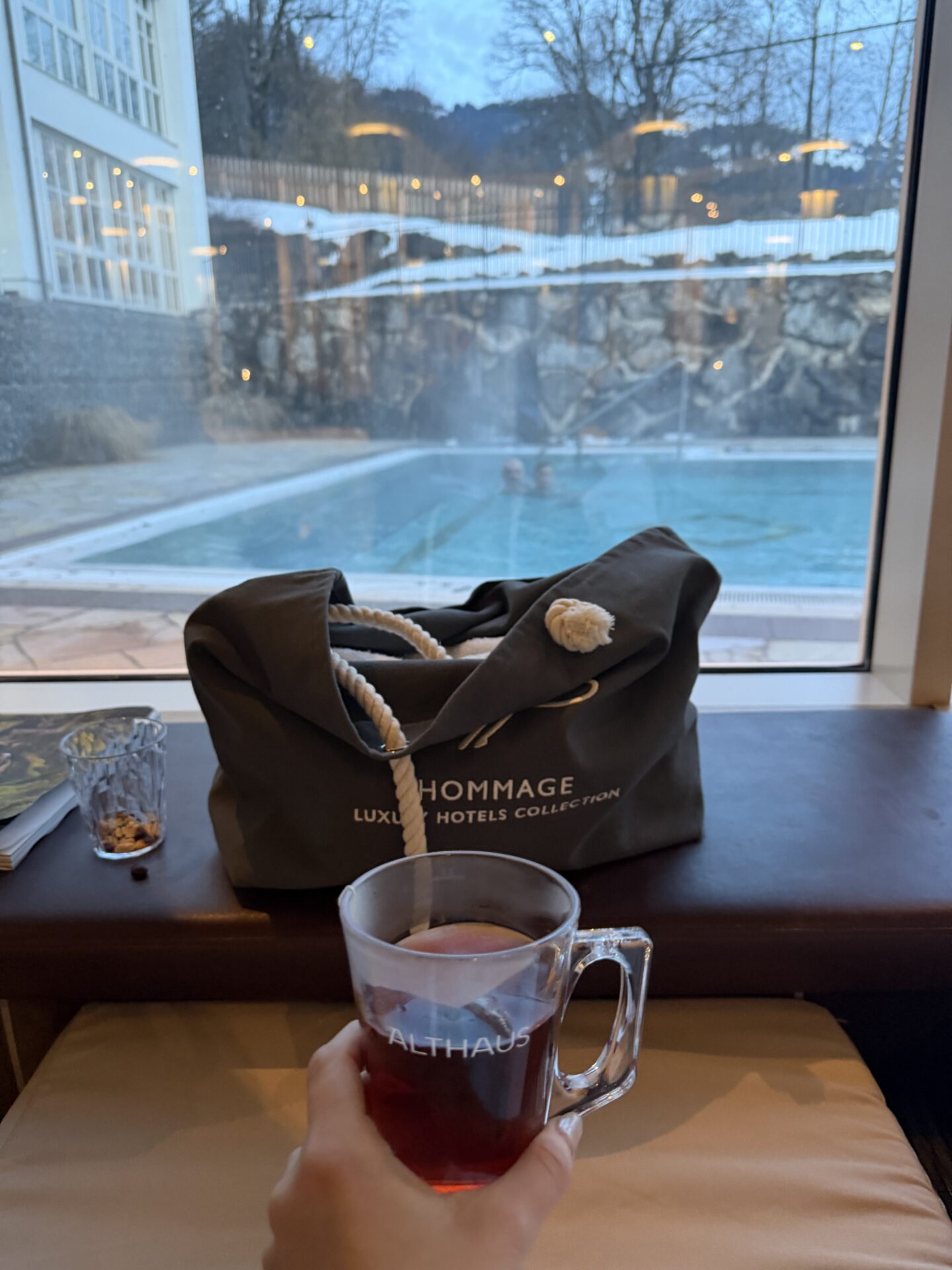
Hotel Review: Grand Tirolia Kitzbühel
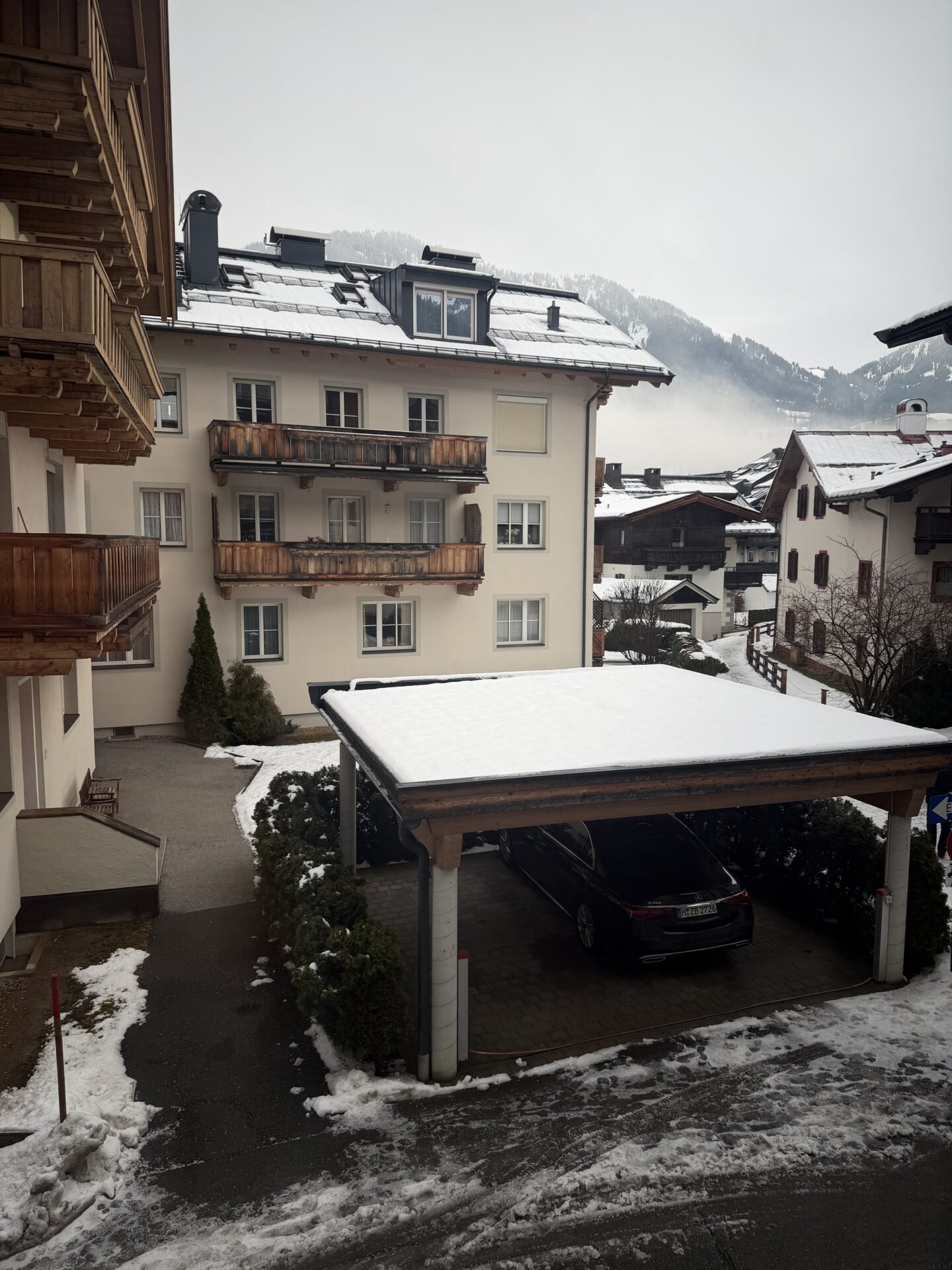
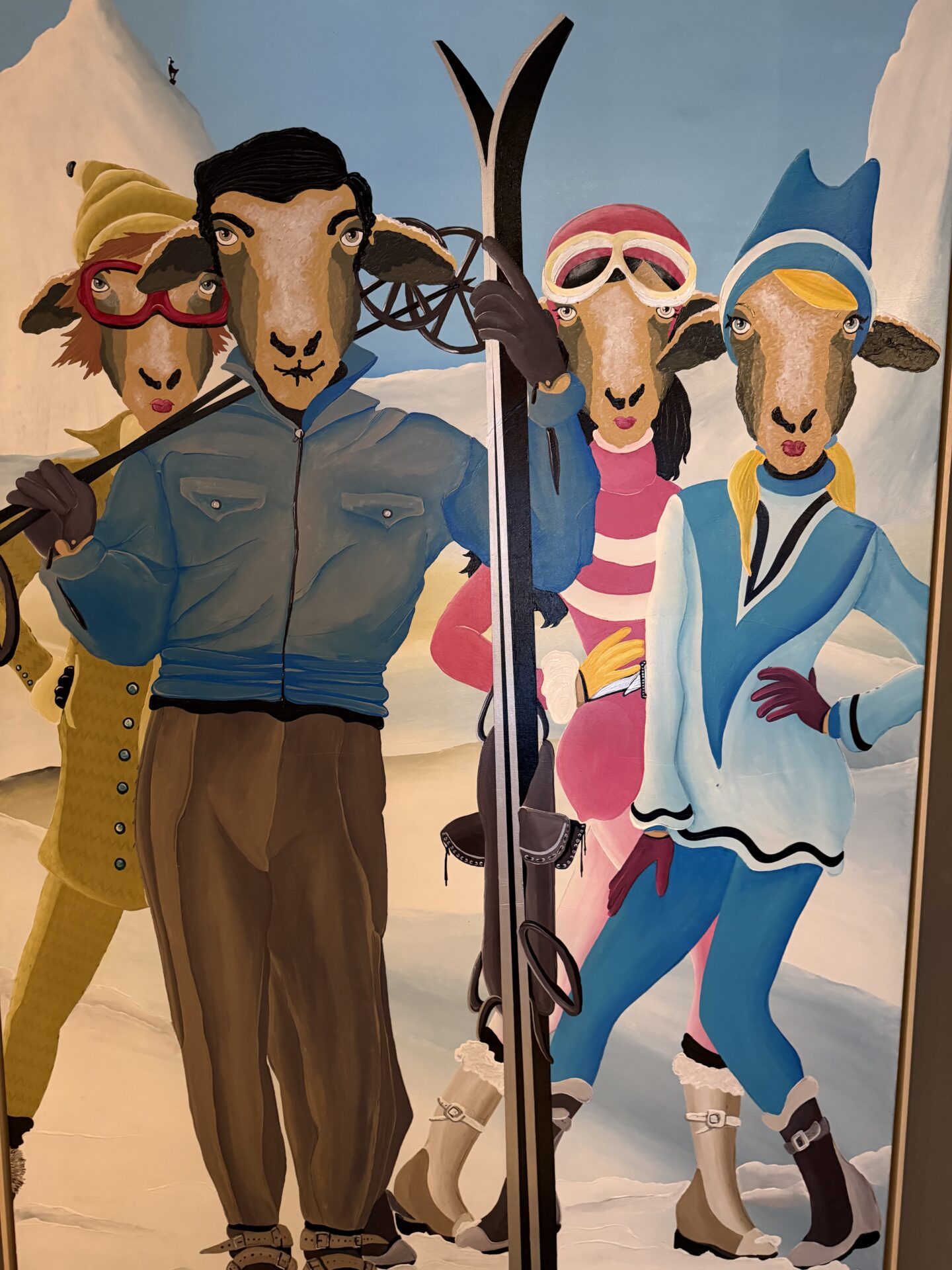
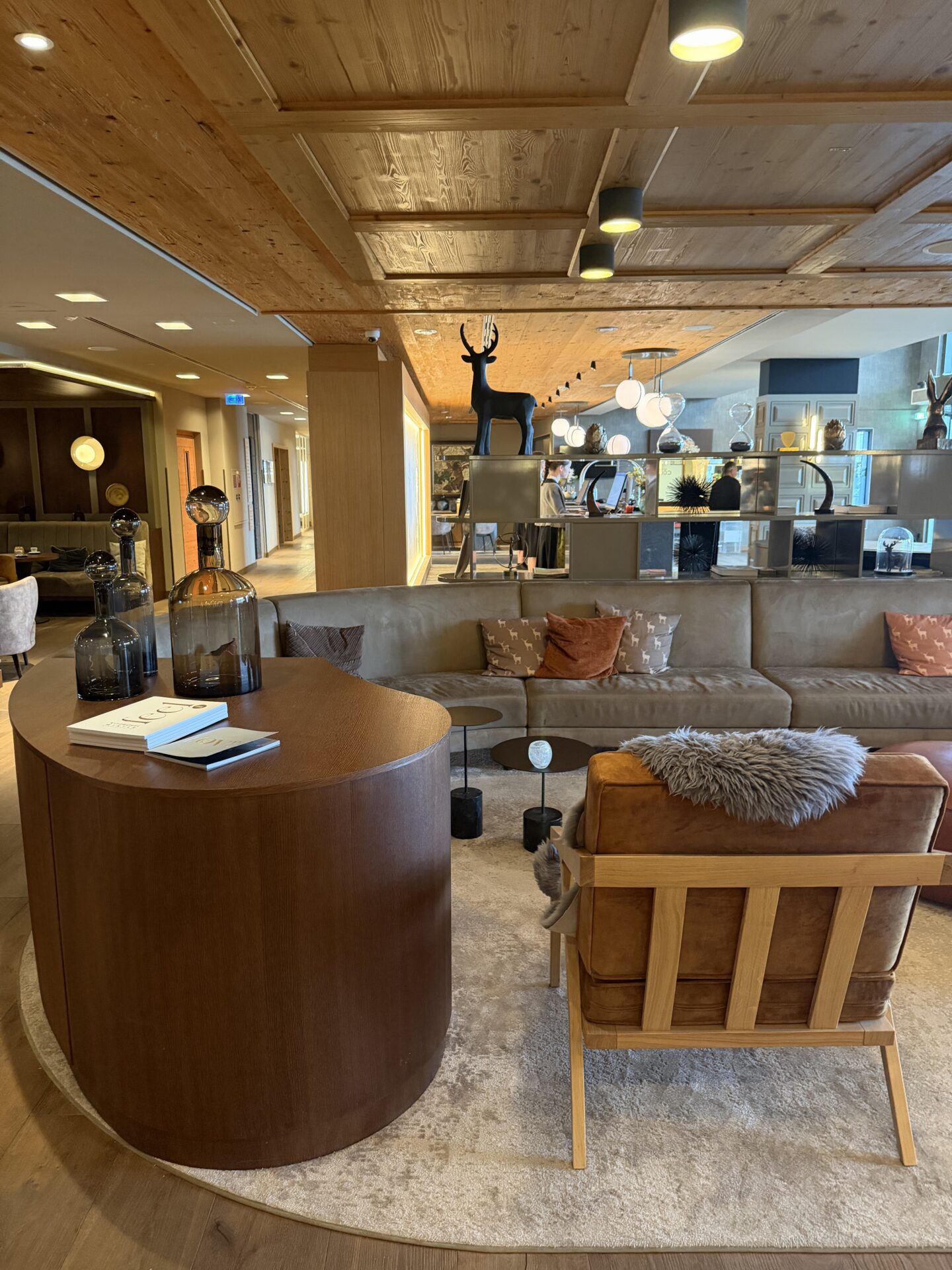
We stayed at the Grand Tirolia Kitzbühel, and I would absolutely recommend it.
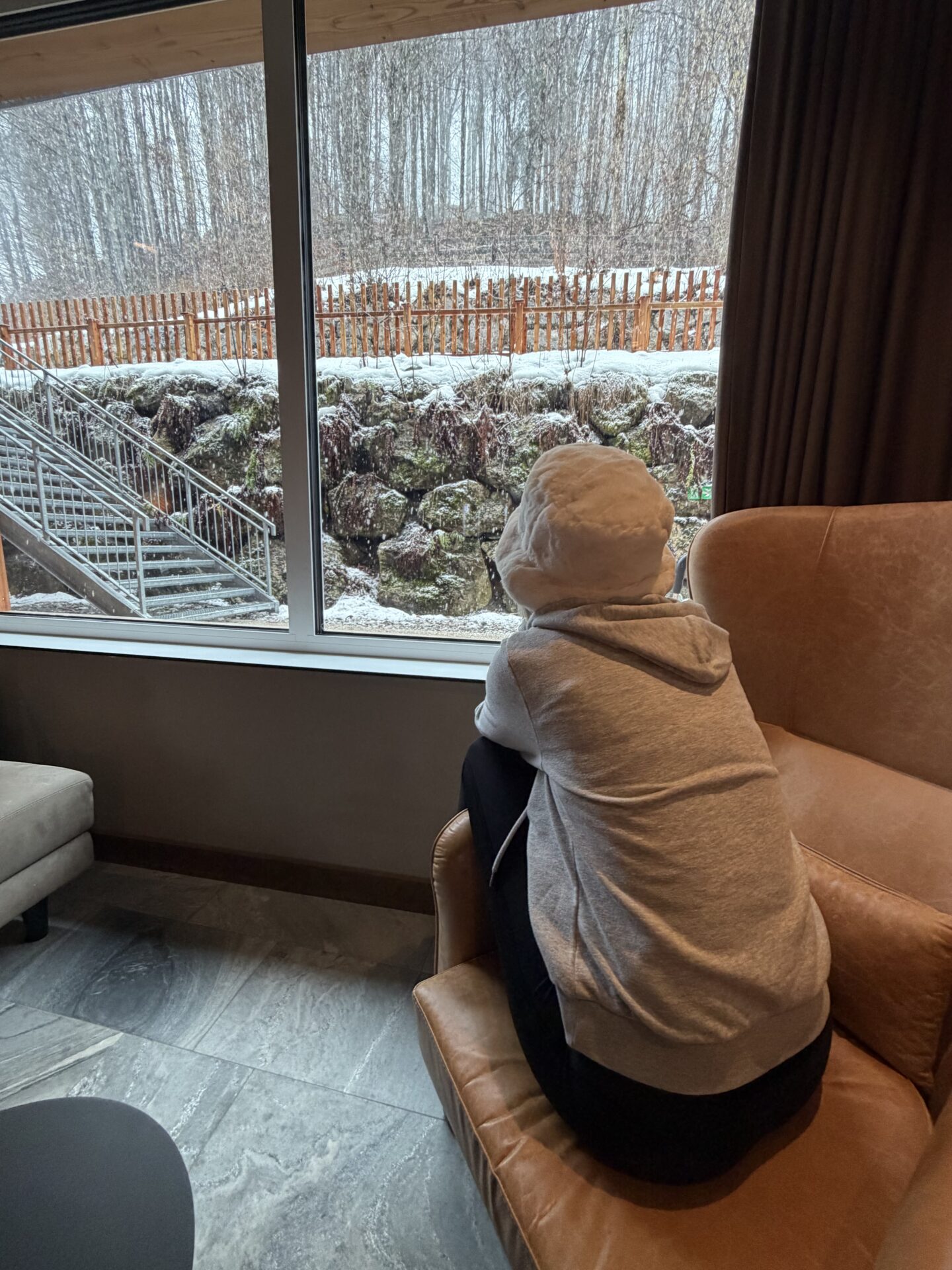
The hotel felt luxurious but still very cozy and alpine, with beautiful mountain views and excellent service.
Some highlights:
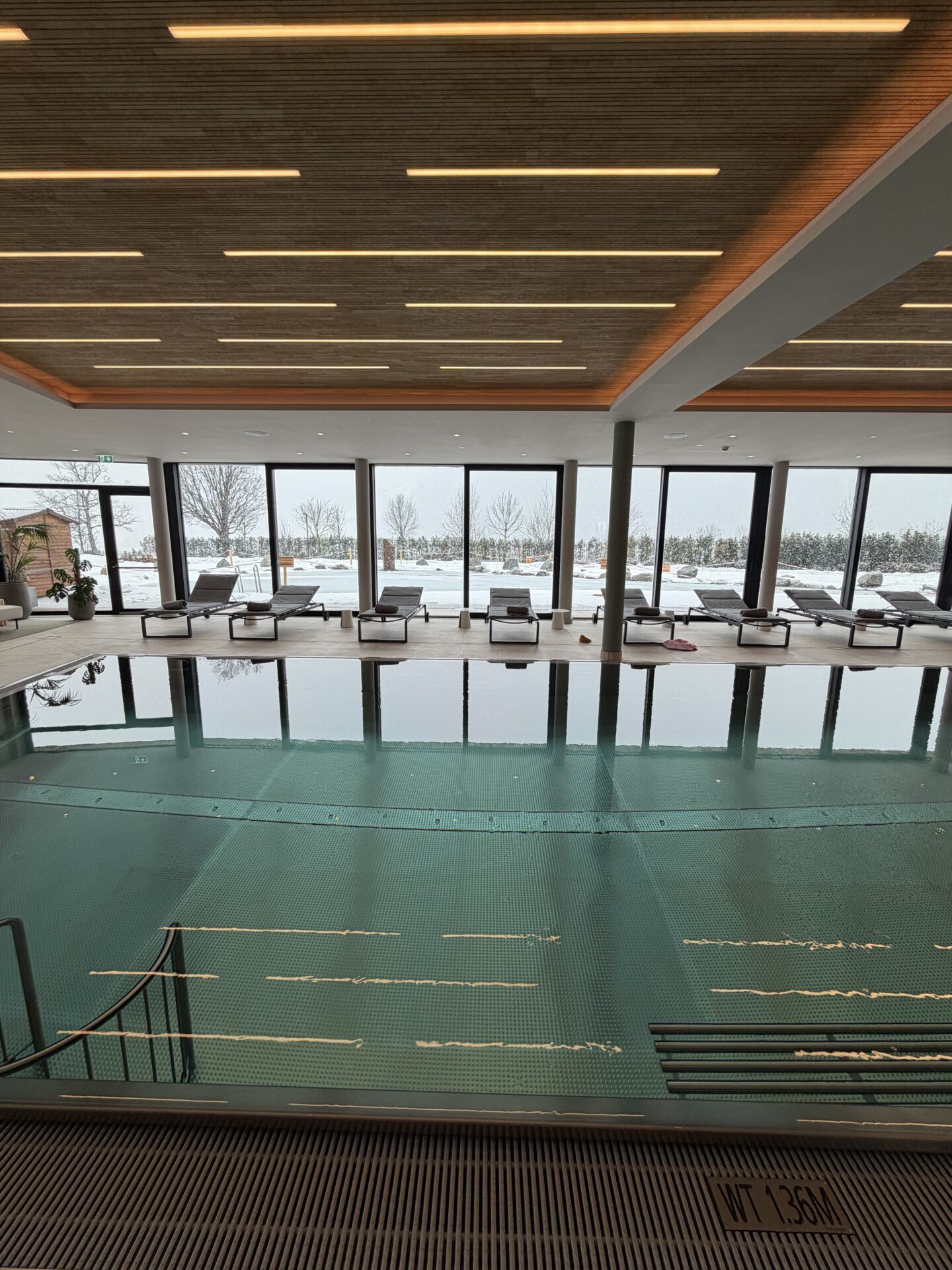
- Beautiful spa and wellness area with indoor pool, sauna, and relaxation areas
- Valet parking available
- Shuttle service to ski lifts
- Elegant rooms with mountain views
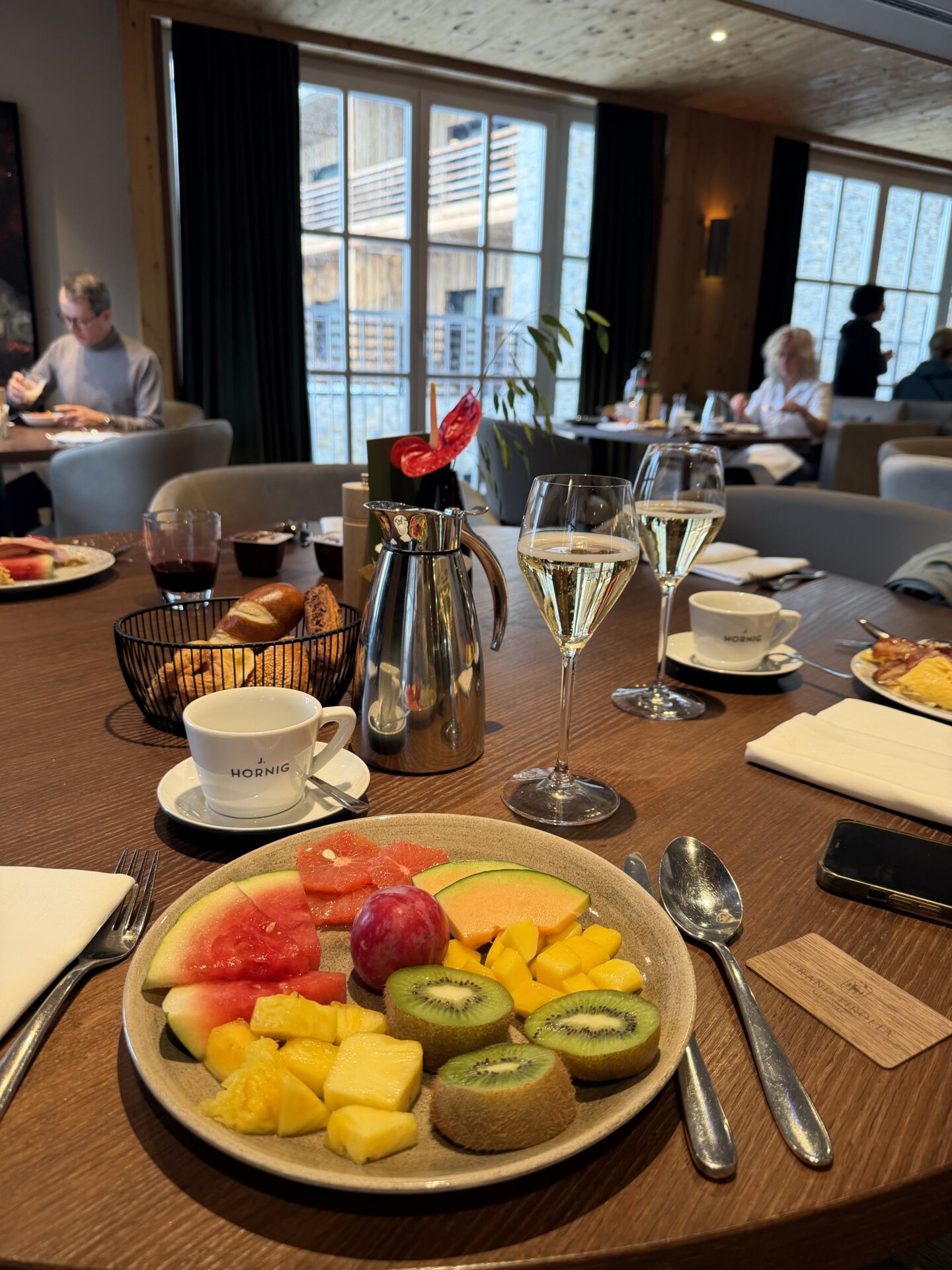
- Excellent breakfast buffet included
The breakfast buffet was particularly impressive with a wide selection of fresh breads, cheeses, eggs, fruit, pastries, and hot dishes – perfect before a day on the mountain.
Although the hotel offers a shuttle to the ski lifts, we usually drove since we had a car.
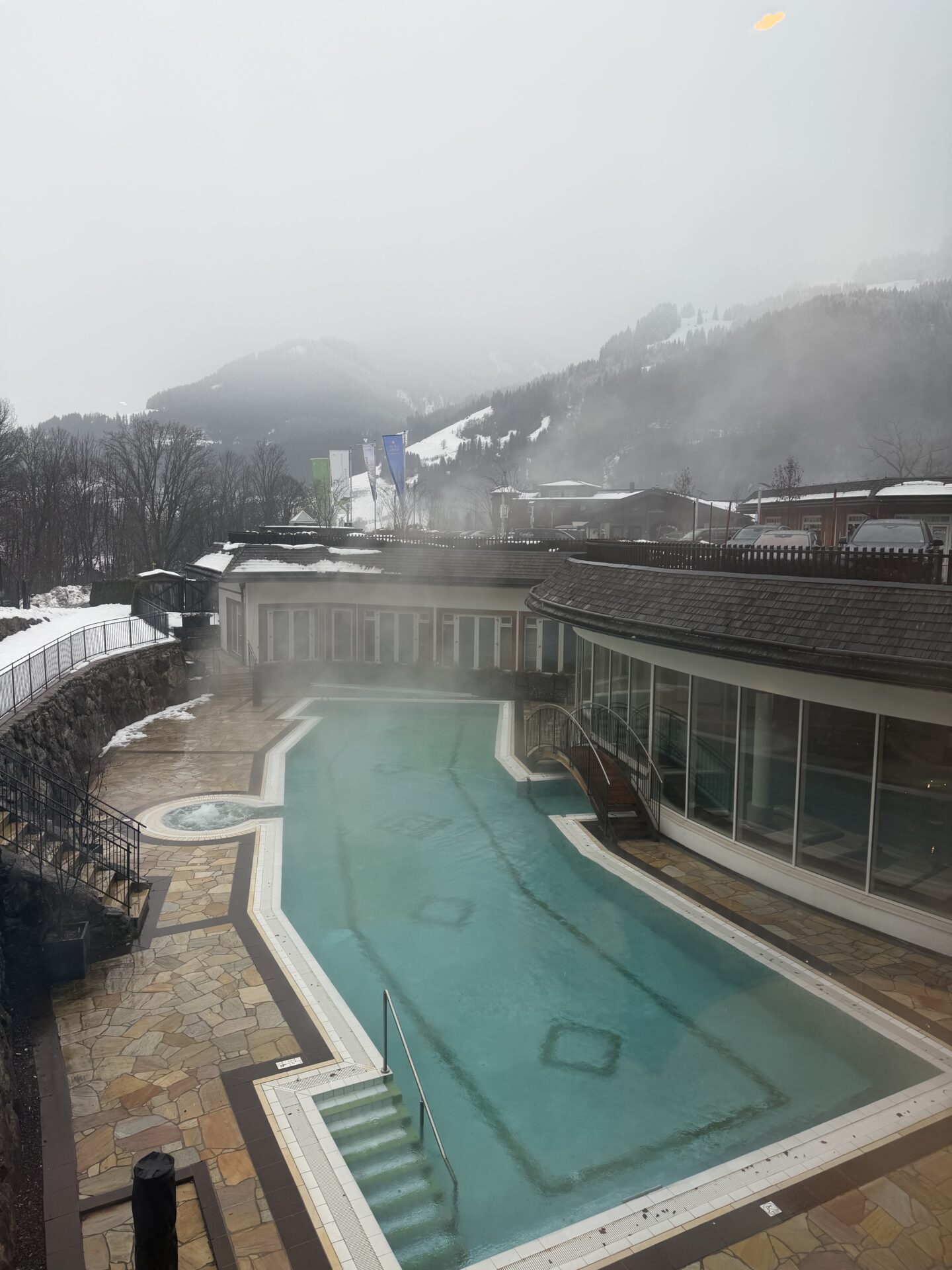
Parking at the Ski Lifts
Parking in the KitzSki area is fairly straightforward.
The three parking lots at the A1 gondola in Kitzbühel cost €14 per day, but most other parking lots across the ski area are free.
Since the different lift bases are only about 15 minutes apart, it’s easy to start skiing from a different area if you want to avoid paying.
We often parked at Jochberg, which was close to our hotel and had free parking.
A useful tip: if you visit the Aquarena spa and pools in Kitzbühel after skiing, they validate parking so your A1 gondola parking becomes free that day.
Using the Ikon Pass
If you have the Ikon Pass, skiing here is very easy.
You don’t need to go to the ticket window. You can go straight to the lift and scan your pass.
There is also an option to upgrade your ticket to include SkiWelt, which opens up access to even more ski resorts in the region. We didn’t have enough time to explore that option, so we stuck with KitzSki.
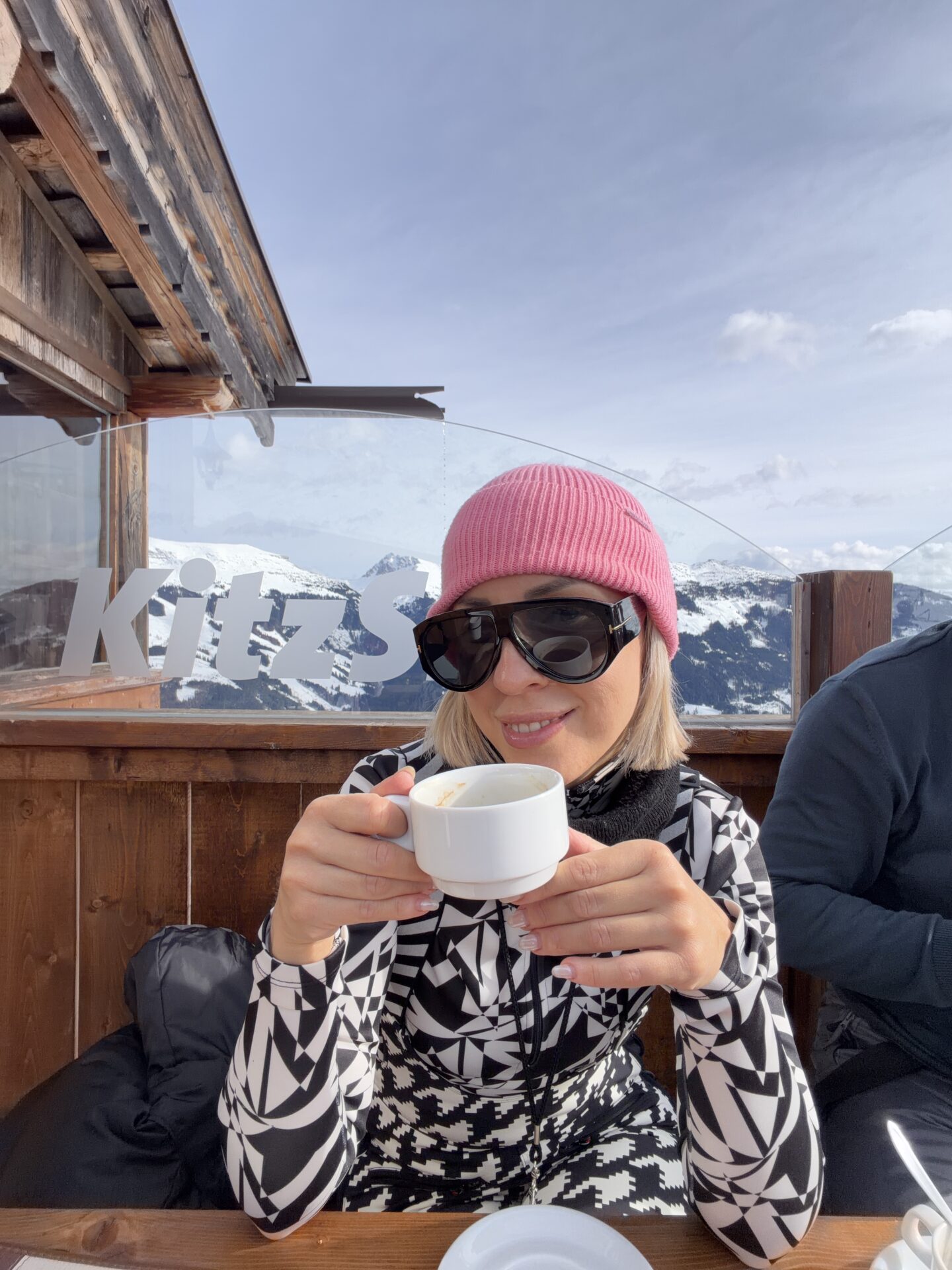
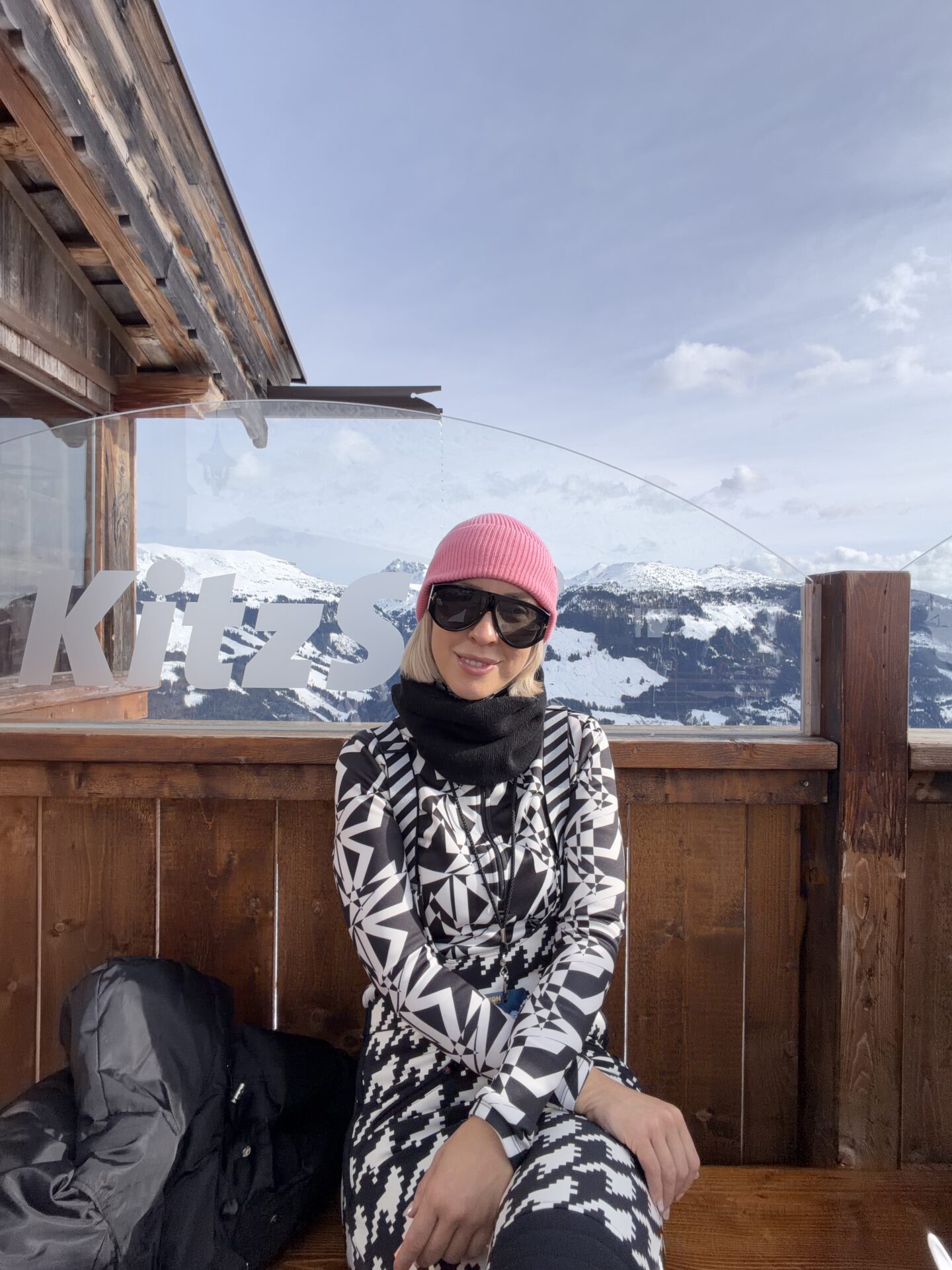
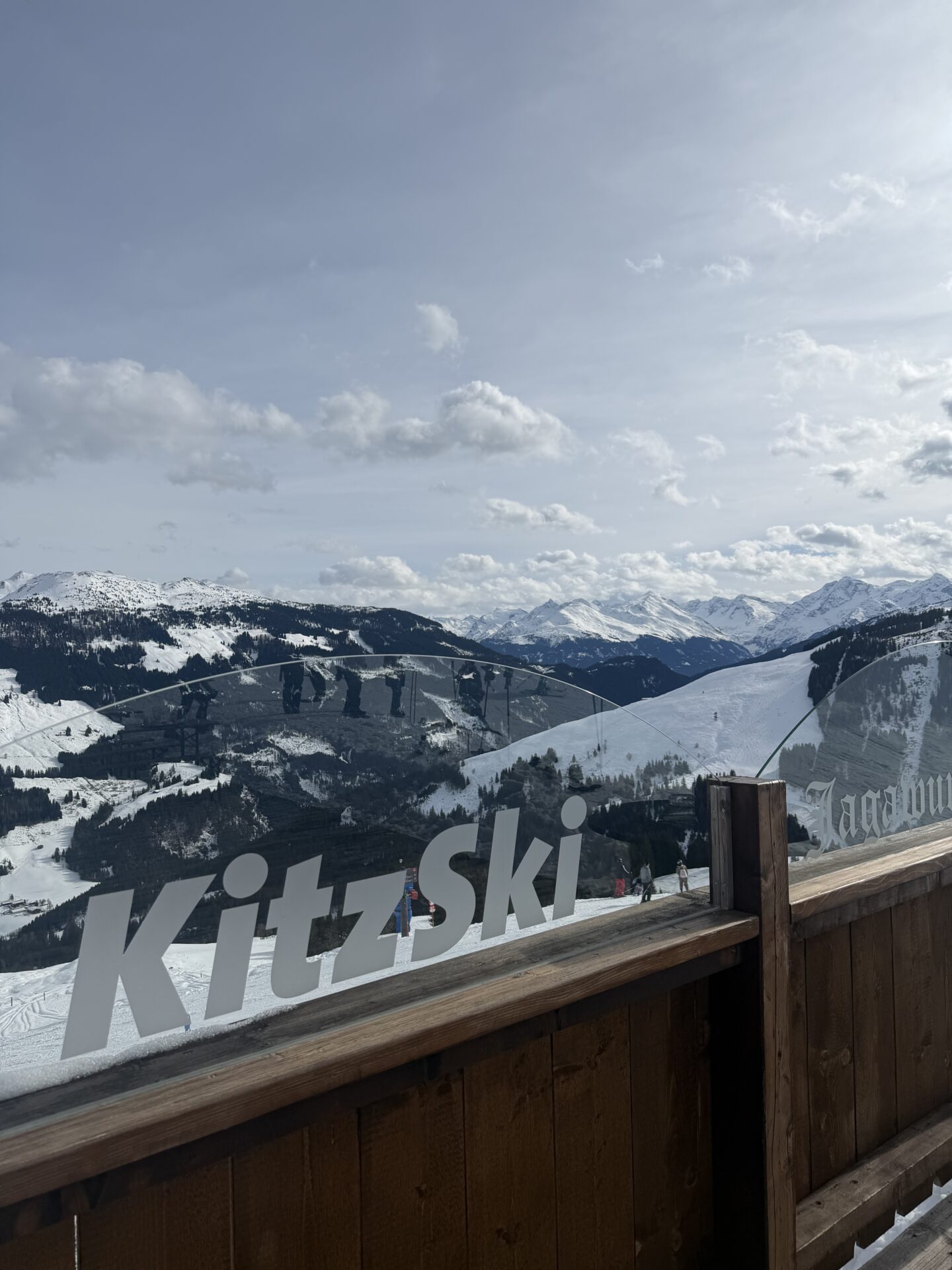
Skiing in Kitzbühel
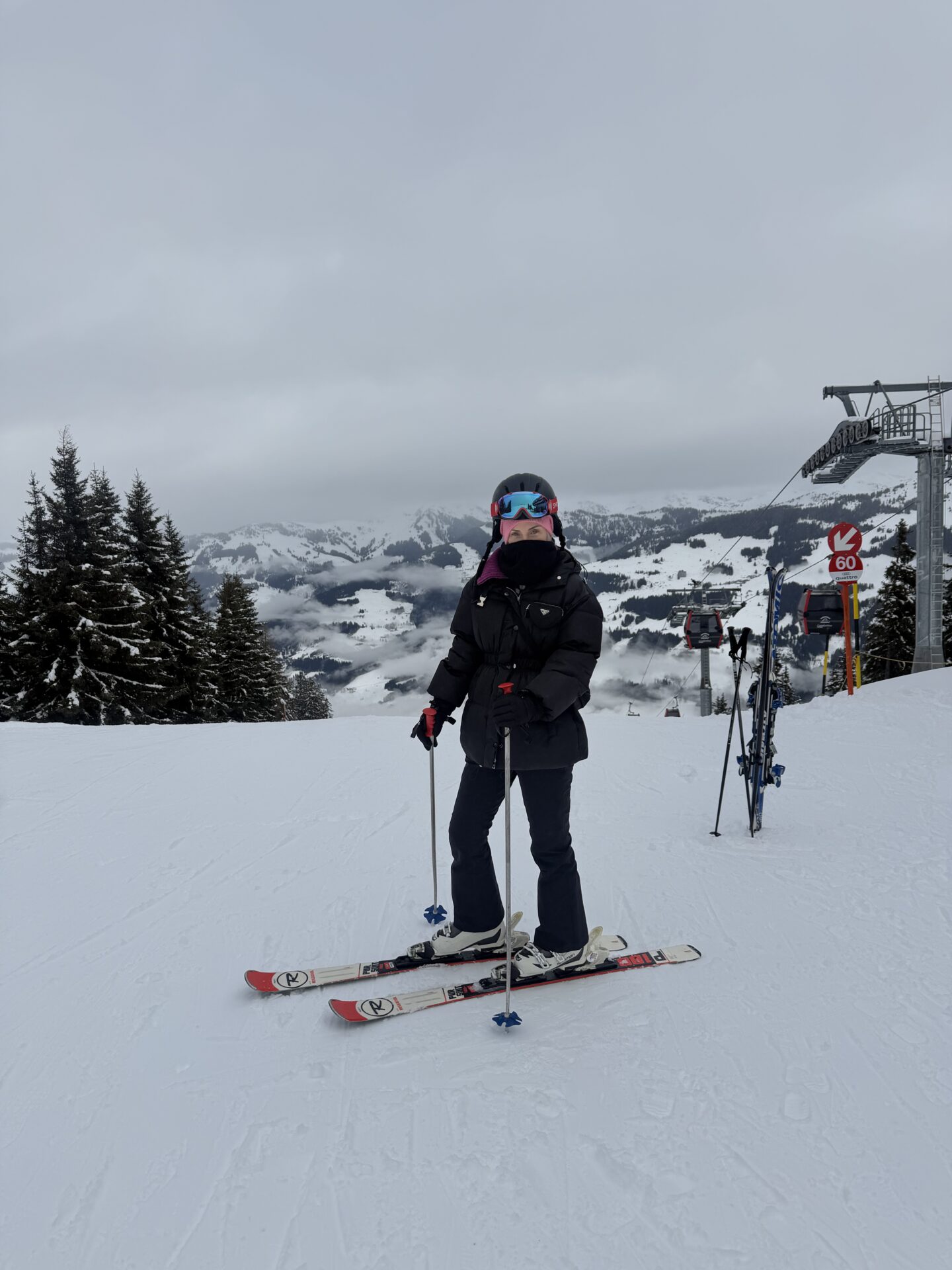
Unfortunately, we didn’t choose the best week for conditions.
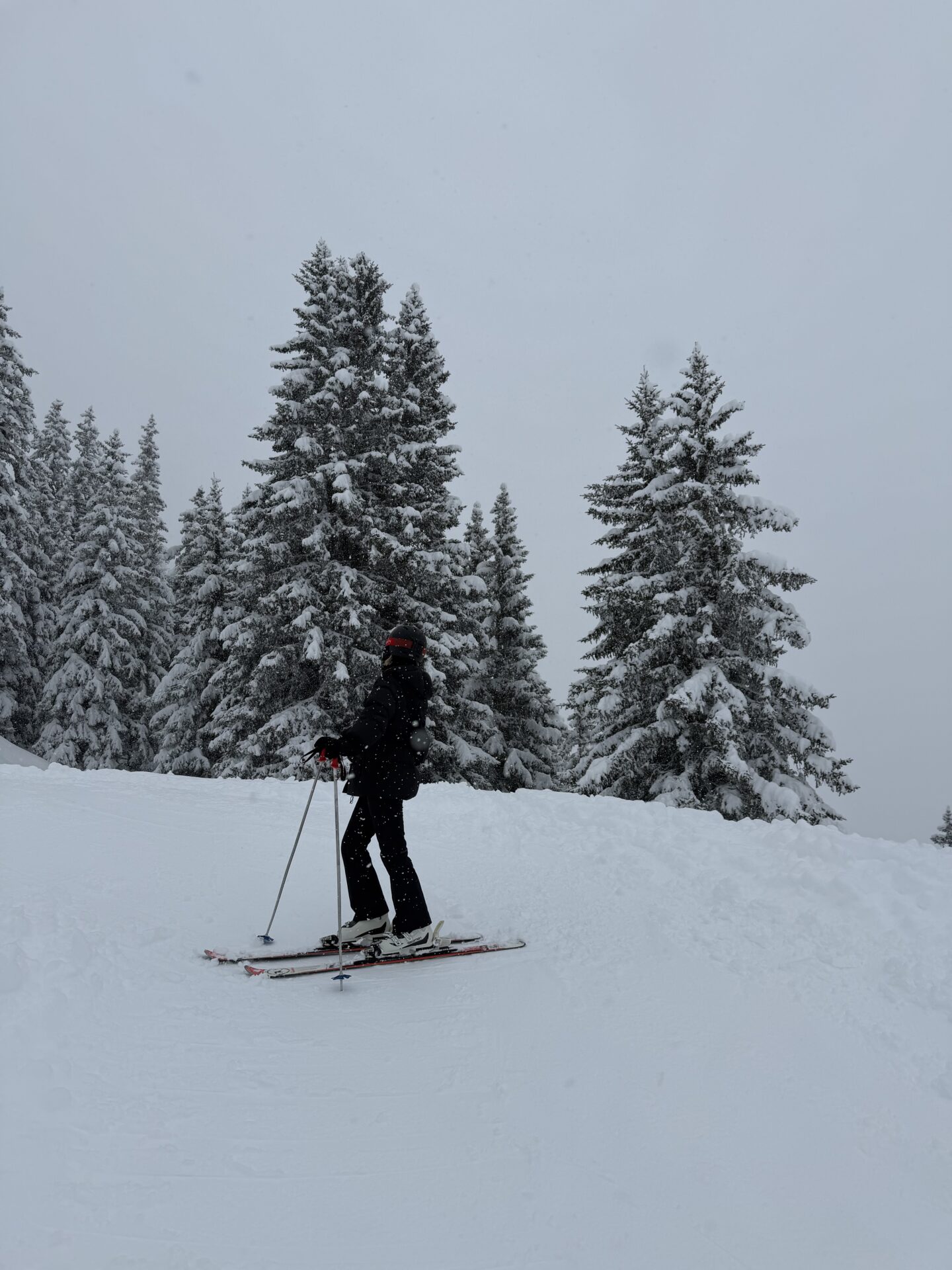
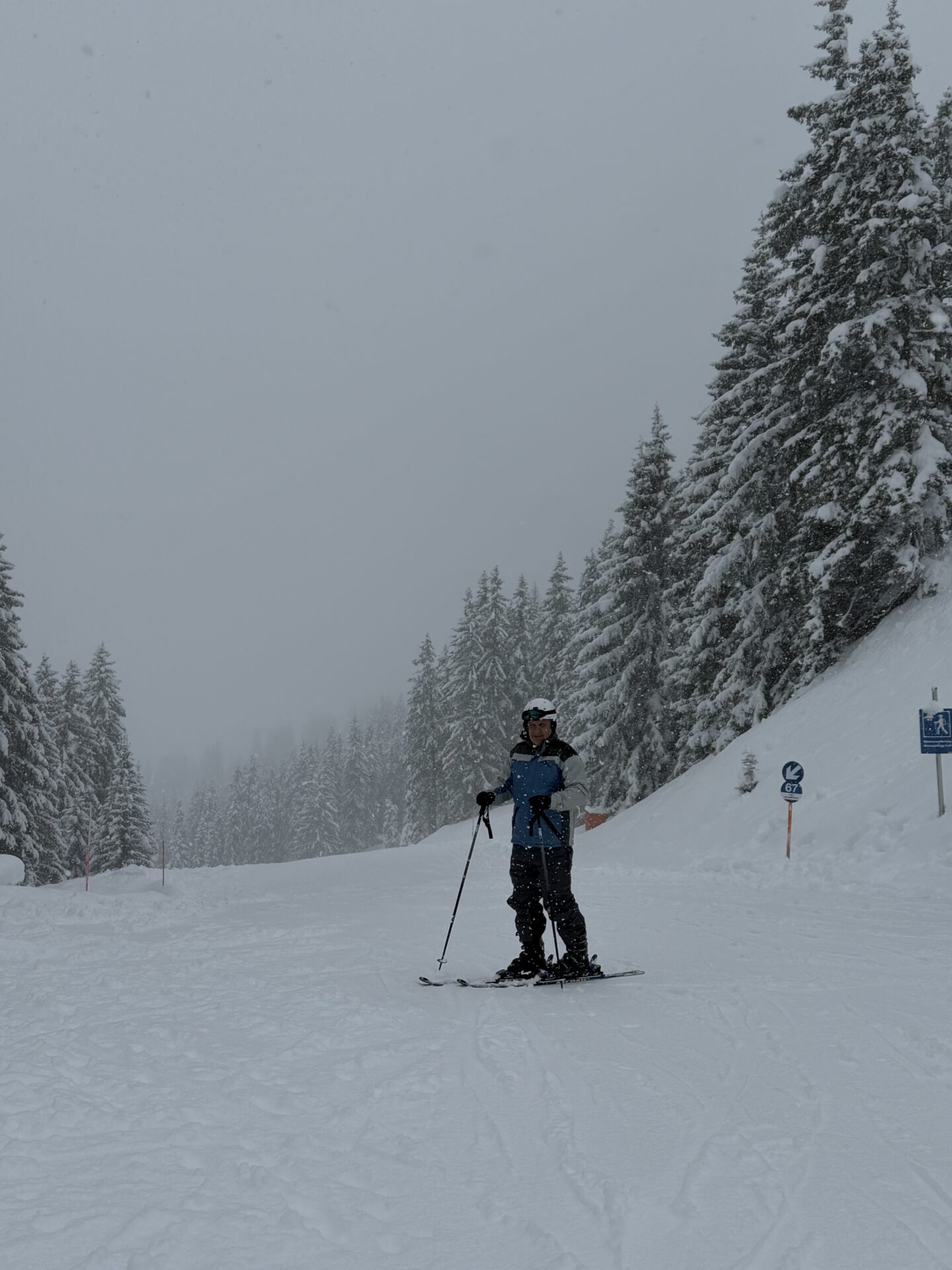
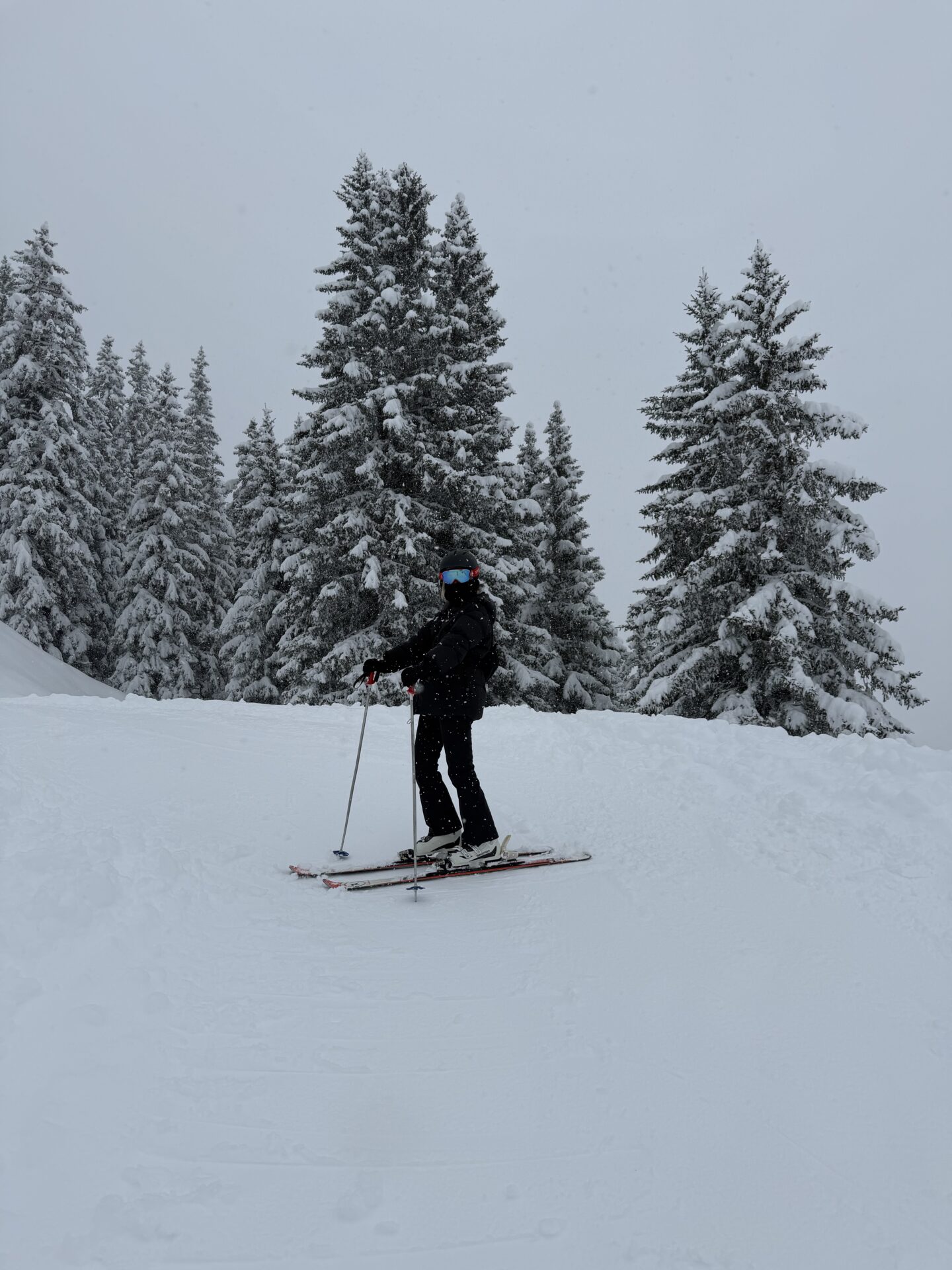
Even though it had snowed a few days earlier, the weather was very warm during the day, which meant the snow became slushy in the afternoon and icy in the morning.
Luckily, the resort has excellent snowmaking, which helped maintain coverage across most runs.
One of the biggest advantages of Kitzbühel compared to some other European resorts is that most ski areas are connected. You can start skiing in Kirchberg, travel across the mountain, and reach areas like G8/G9 without needing a bus.
However, if you miss the final lift connection, ski buses run between bases to bring you back.
Just be careful: every lift has different closing times, so it’s important to watch the schedule if you’re skiing far from where you started.
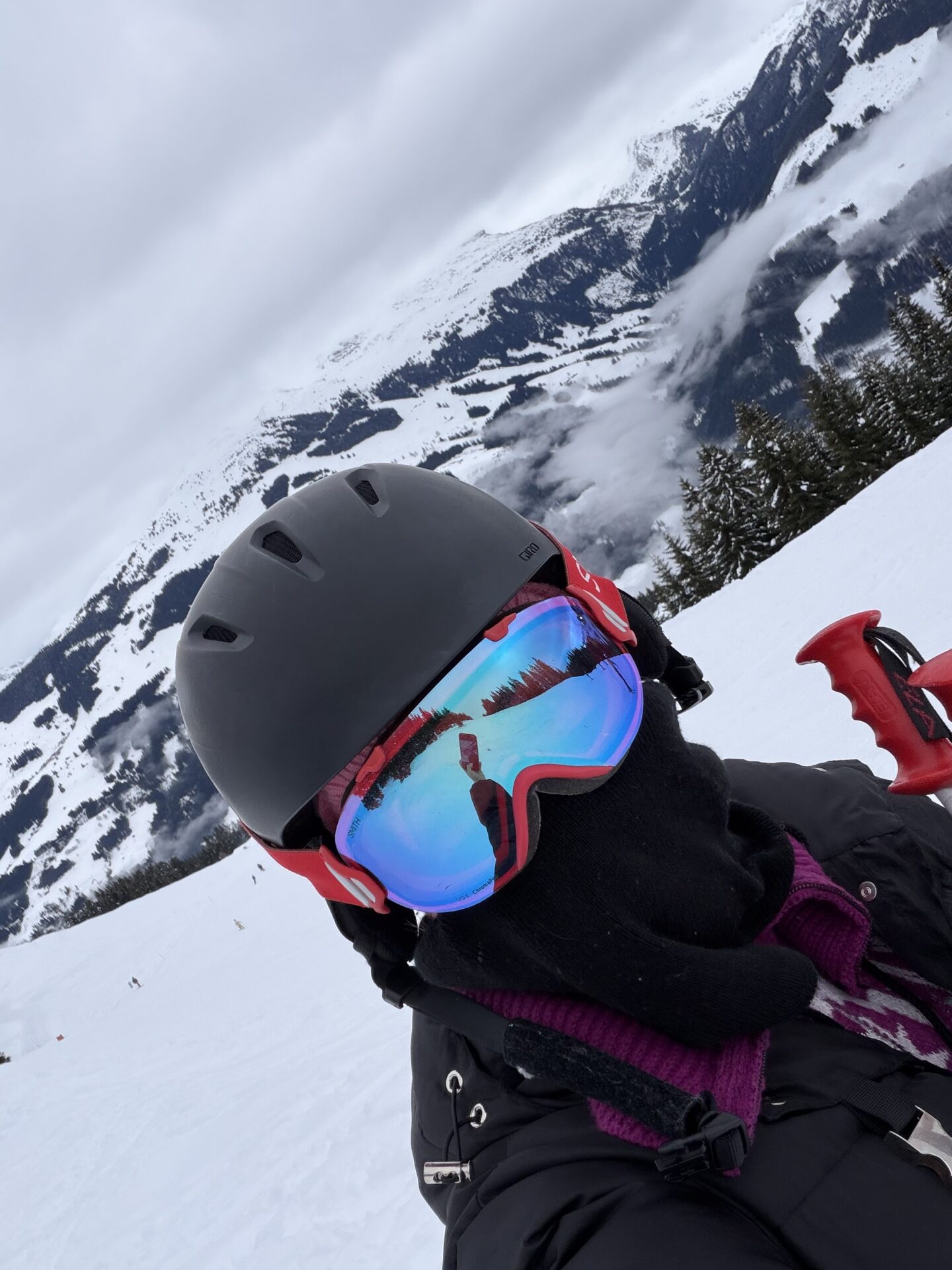
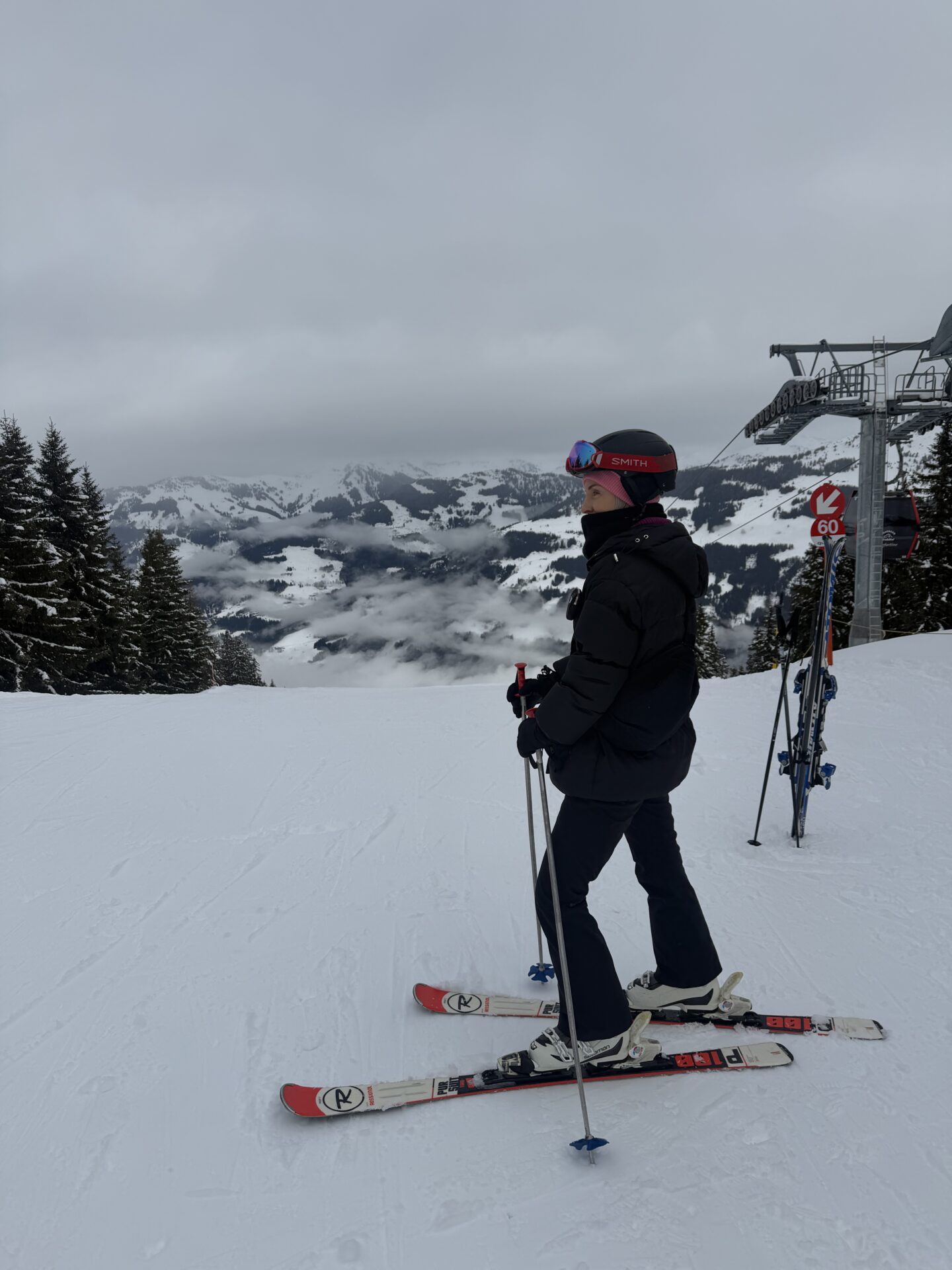
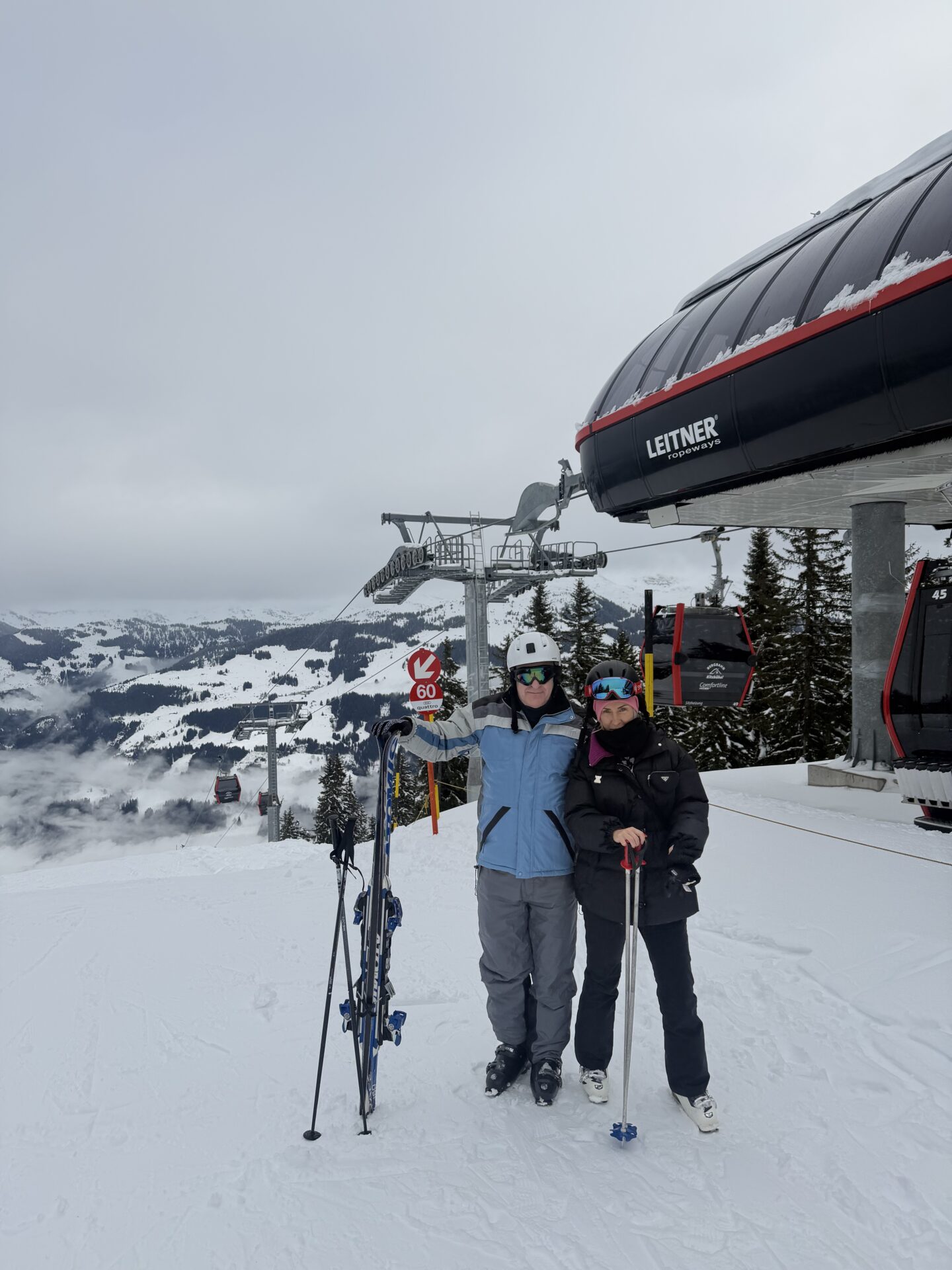
Ski Lifts
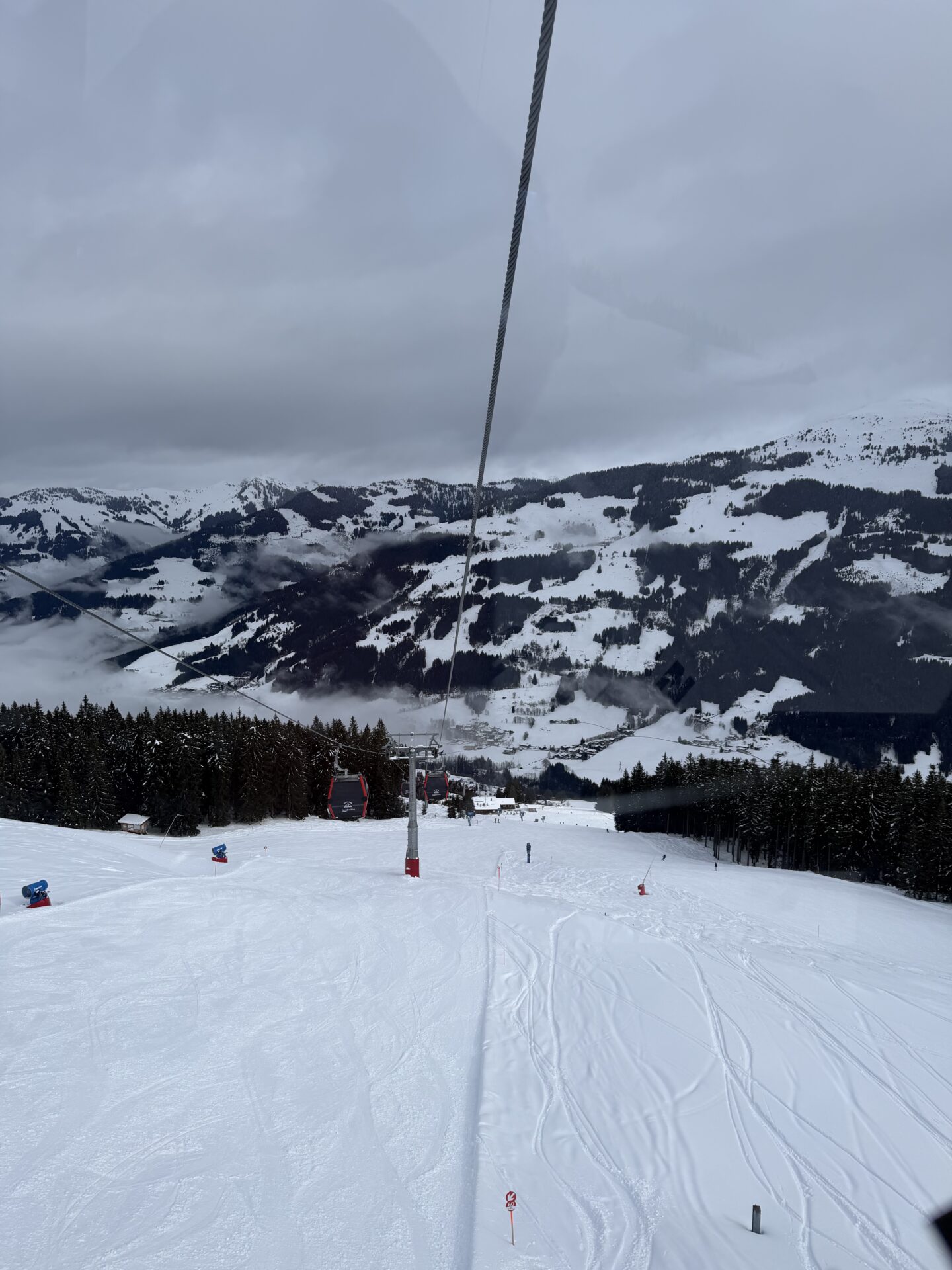
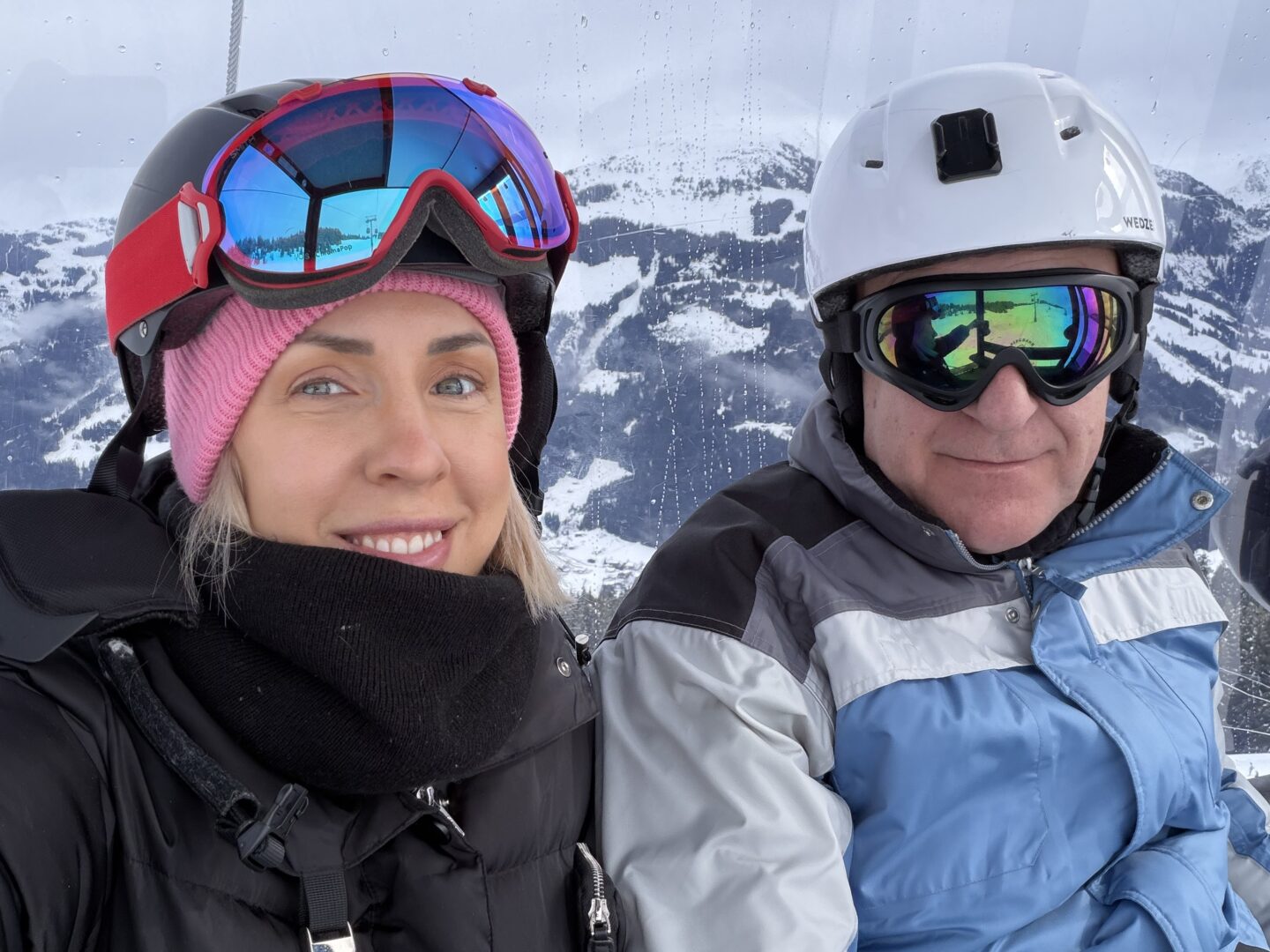
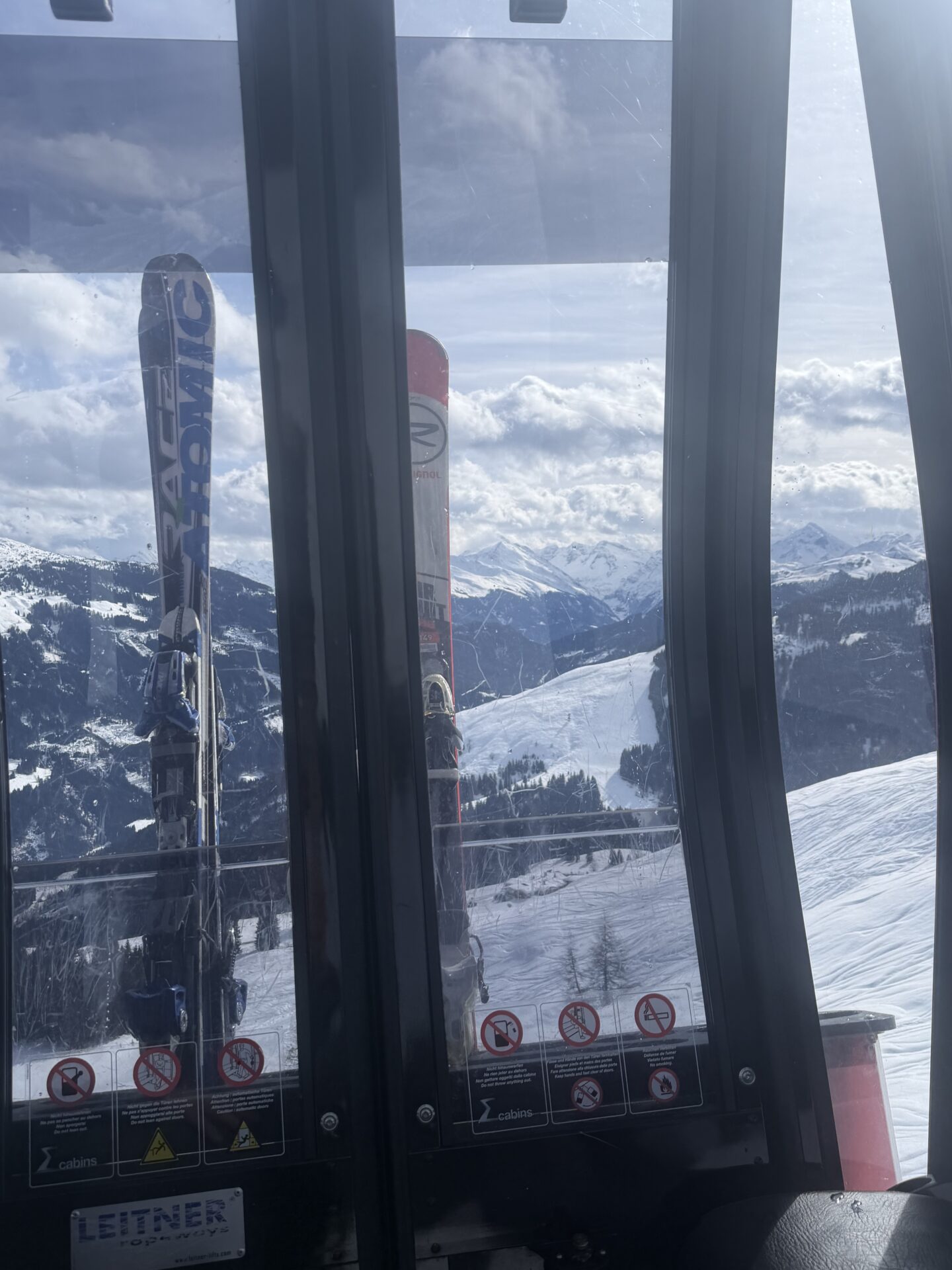
The lift infrastructure is excellent.
- Most chairs are heated
- Many have bubbles for wind protection
- Safety bars are mandatory and auto-lock
There are very few T-bars, and they’re rarely necessary to get around the mountain.
Ski Map vs App
The KitzSki app isn’t very helpful.
The only useful feature is checking lift open and closing times.
The printed ski map is much easier to understand. One confusing thing is that it doesn’t clearly indicate the direction of some lifts or runs, so it takes a bit of time to learn how everything connects.

Run Difficulty (Very Confusing)
Runs are labeled as:
- Blue – Easy
- Red – Intermediate
- Black – Advanced
However, the grading felt very inconsistent.
Some blue runs were steeper than reds. Some reds were flatter than blues. And some blacks felt easier than reds.
Planning routes for beginners can be tricky because you never quite know what you’re getting until you ski it.
Overall, the mountain seems to cater most to strong intermediate skiers.
Beginner Areas
There are many free beginner areas where first-timers can practice.
The resort also offers free ski days for kids, which makes it family friendly.
Ski Rentals & Ski Service
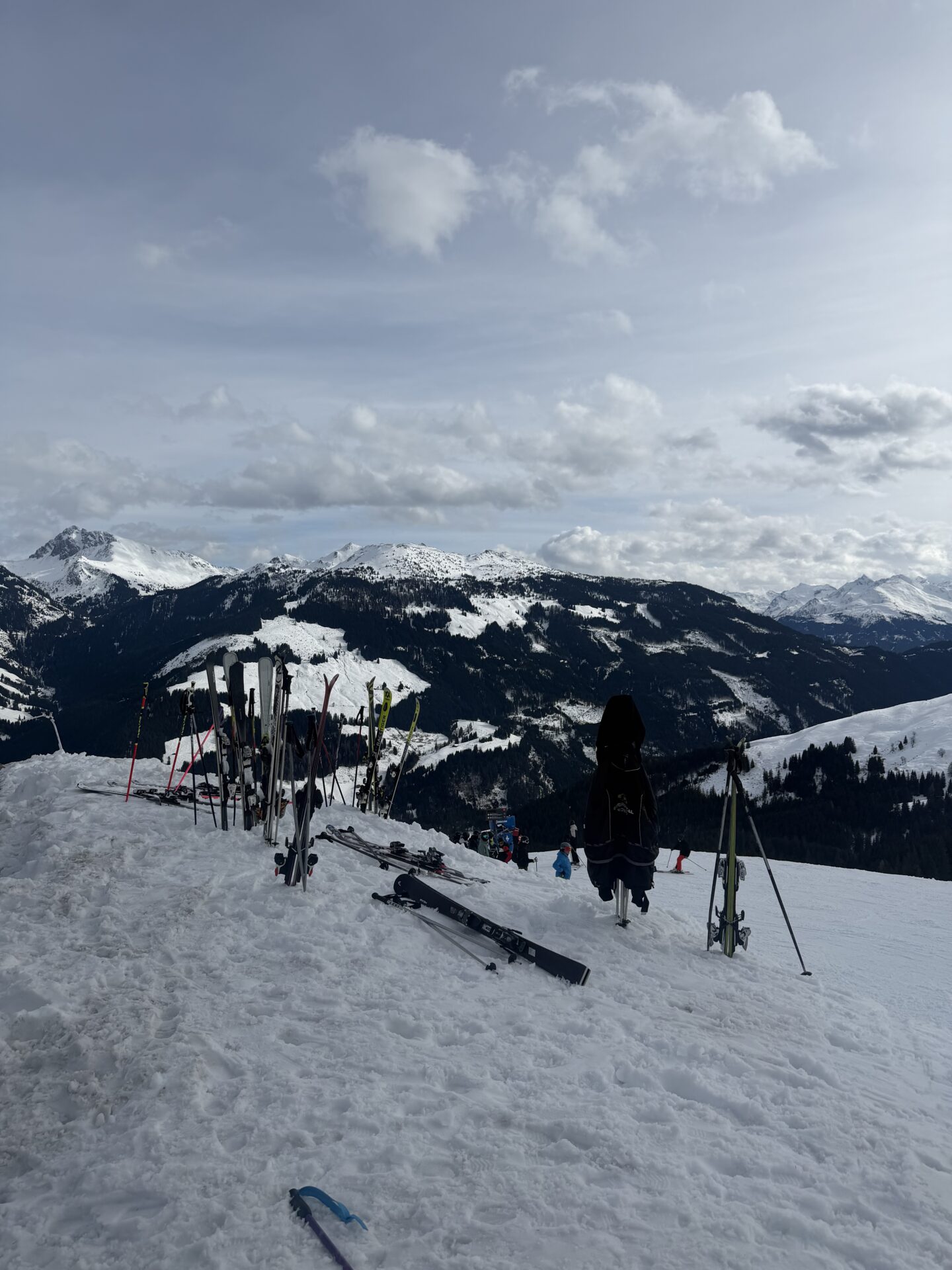
One thing Kitzbühel does extremely well is equipment rentals and service.
Rental shops exist at almost every gondola base, and the system is very convenient.
You can:
- Rent skis for the day
- Leave them overnight for tuning
- Pick them up again in the morning
This means you don’t have to carry gear back to your hotel.
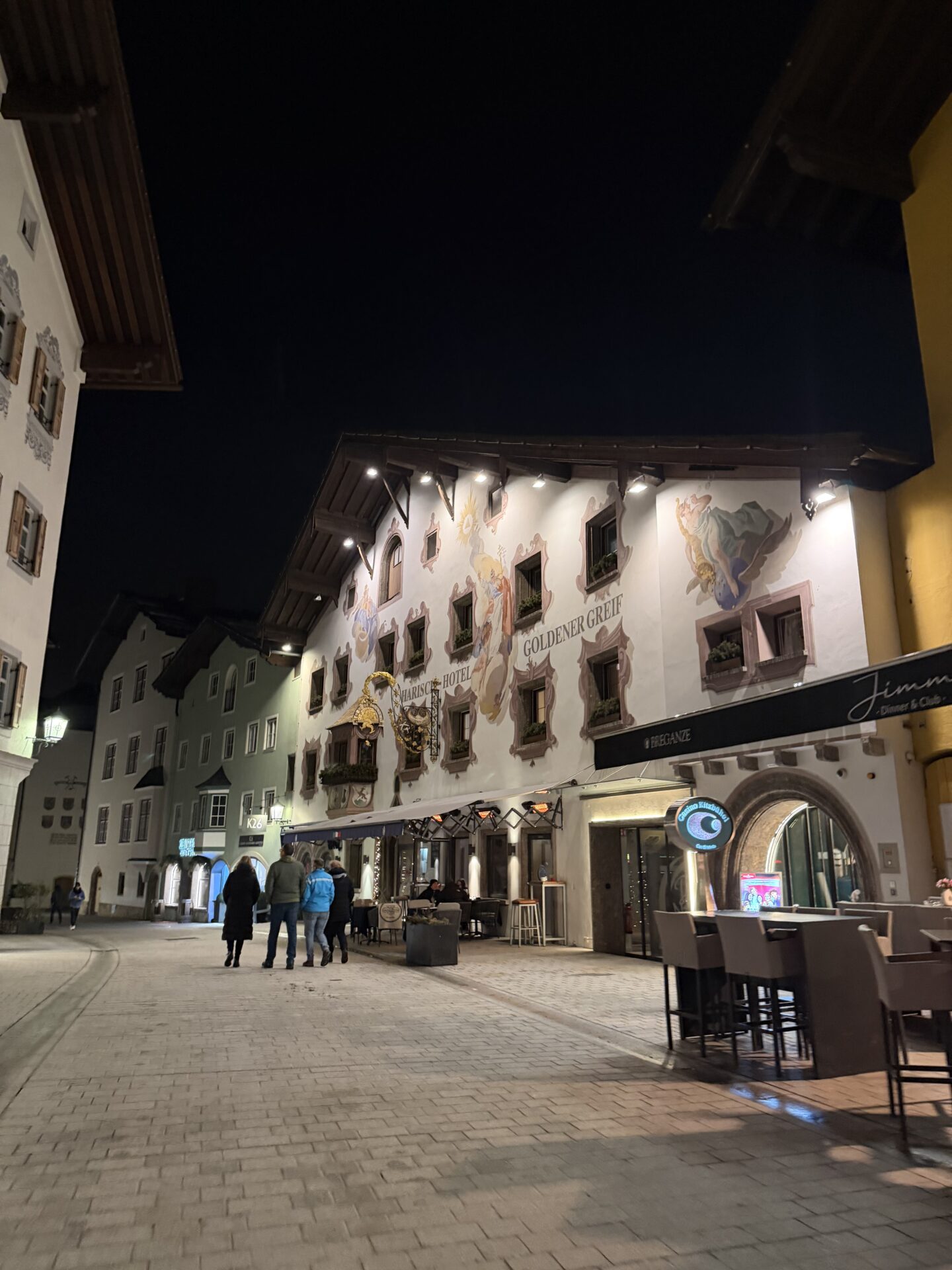
Après Ski & Town Atmosphere
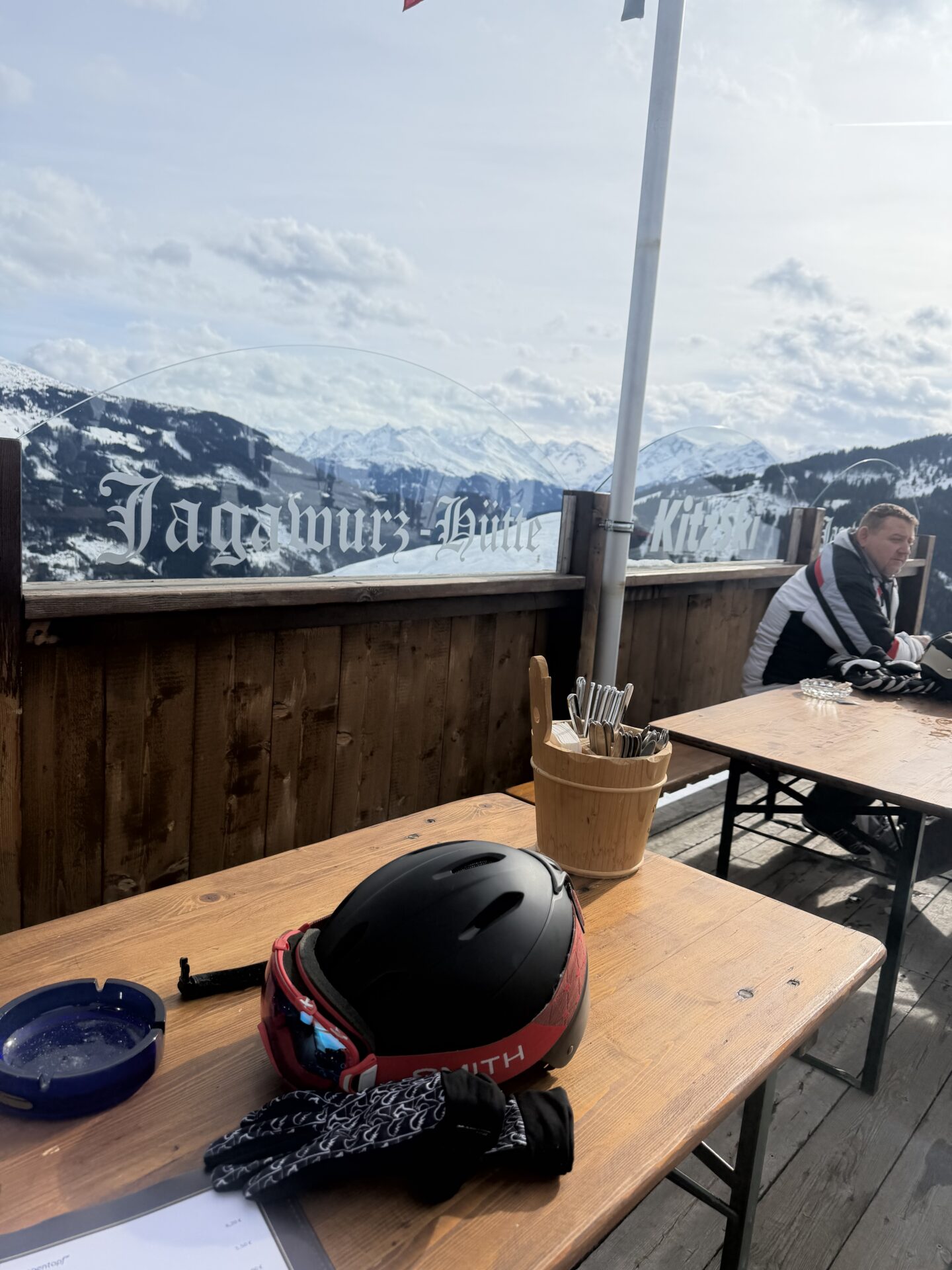
European ski resorts are known for their atmosphere, and Kitzbühel absolutely delivers for on-mountain après ski.
Every mountain hut and chalet becomes lively in the afternoon with music, drinks, and people dancing.
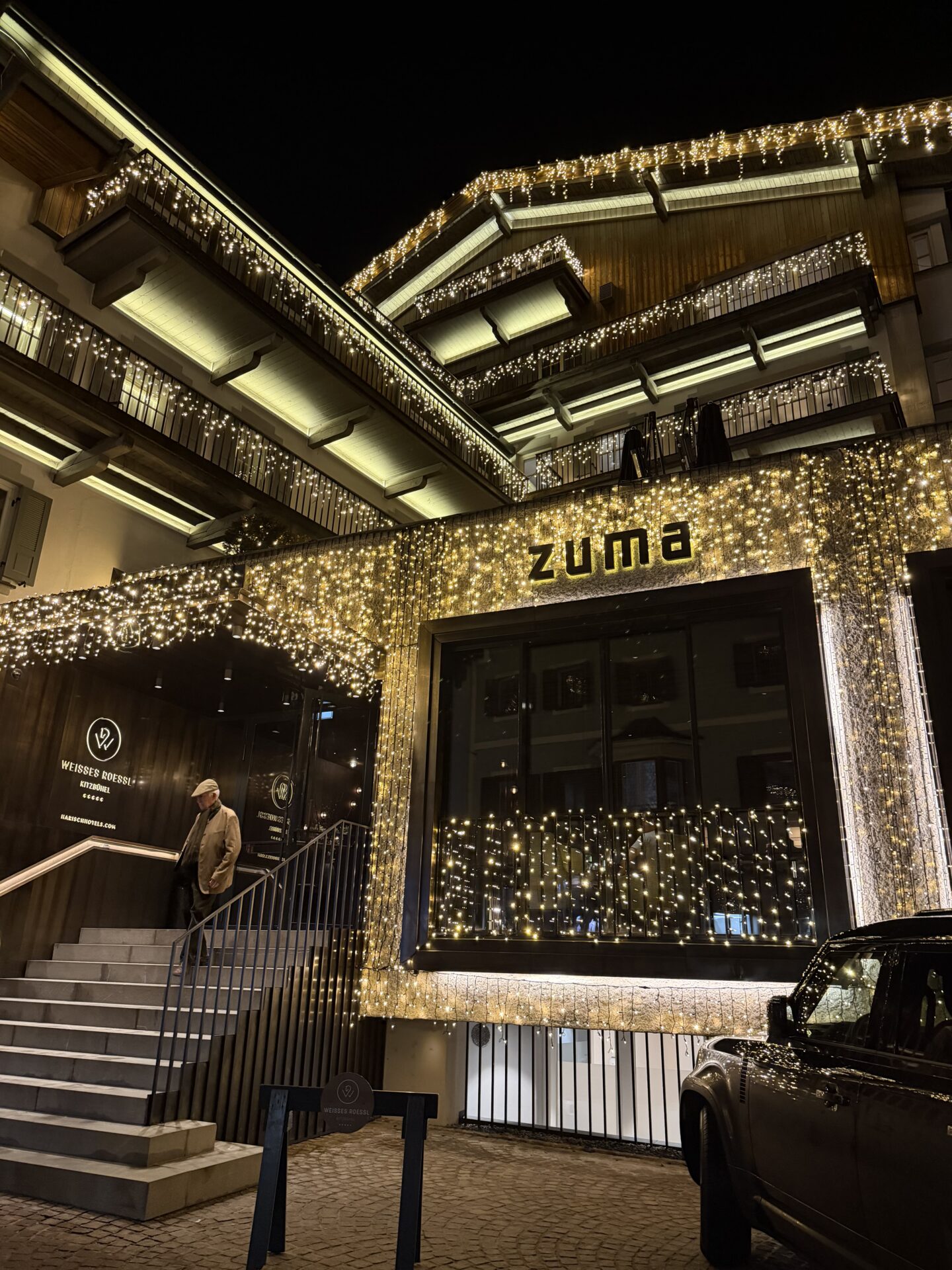
However, once you return to town, things quiet down surprisingly early.
During Monday through Friday, the town felt very sleepy. Many bars were empty and streets were quiet after 10 PM.
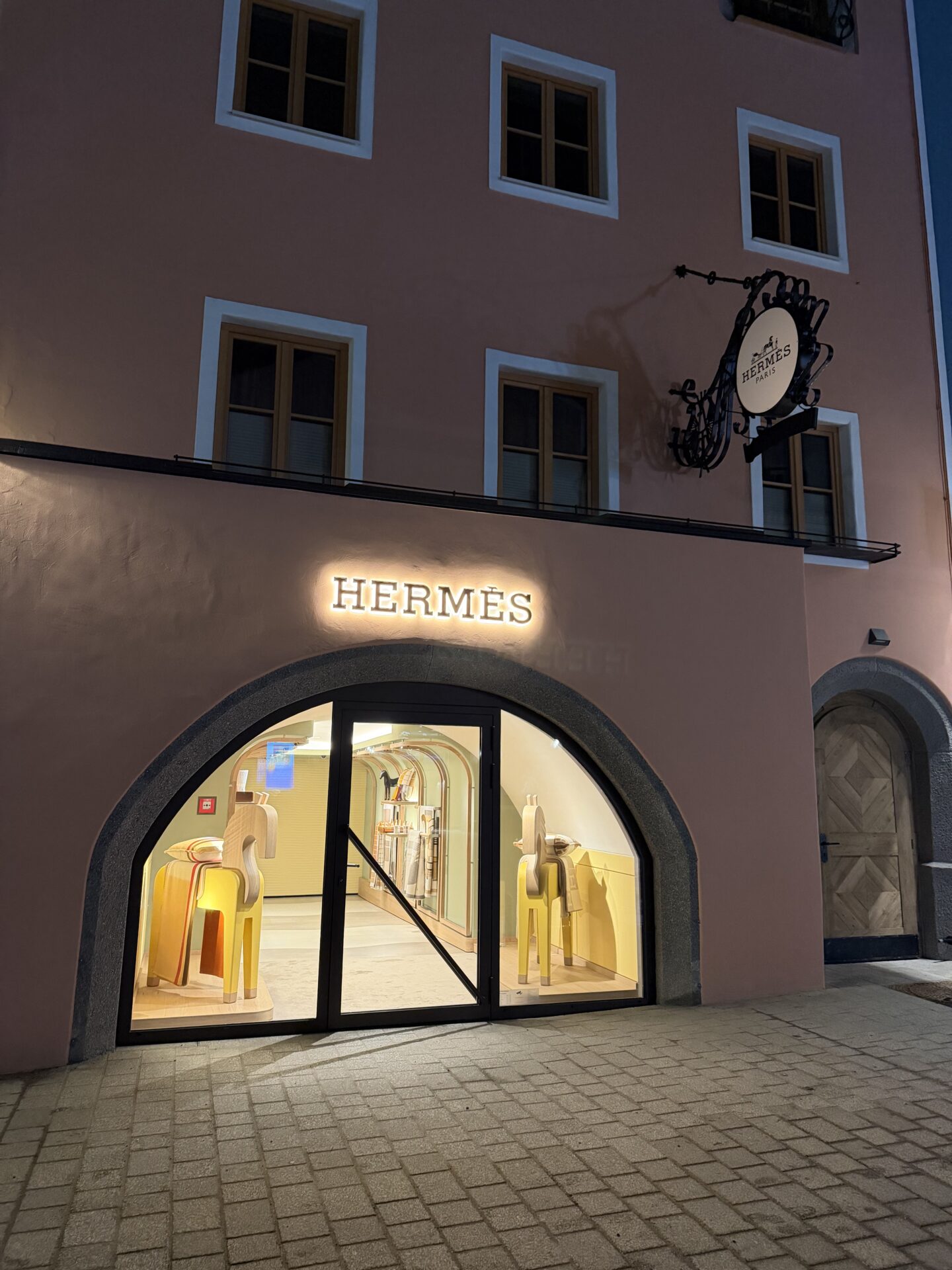
Saturday night was livelier, but overall the town felt very bougie and upscale.
Everything – from shops to restaurants – caters to a luxury crowd, and many stores close surprisingly early.
Compared to Chamonix, which has a much more vibrant town atmosphere, Kitzbühel felt quieter.
Day Trip to Cortina, Italy
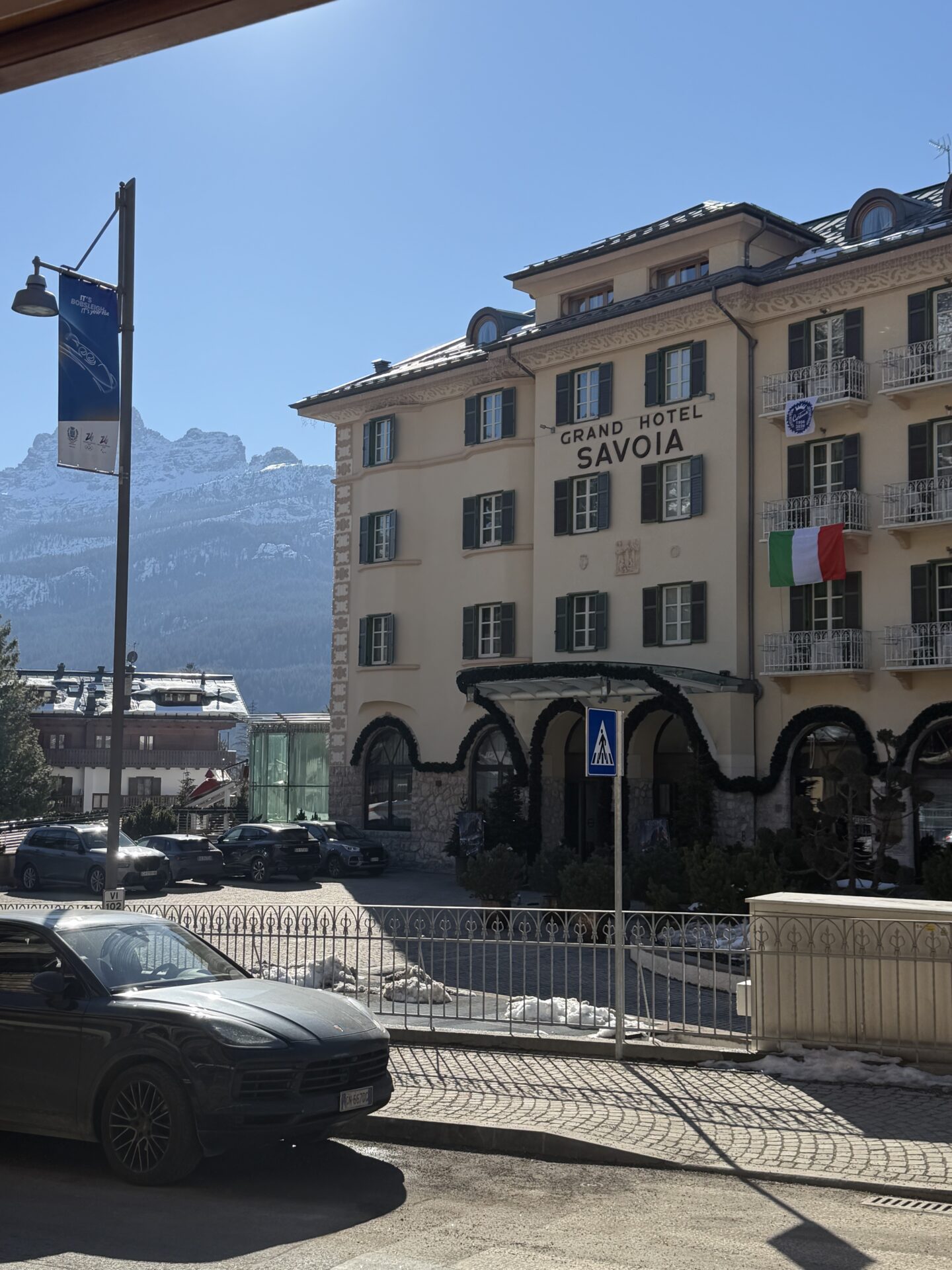
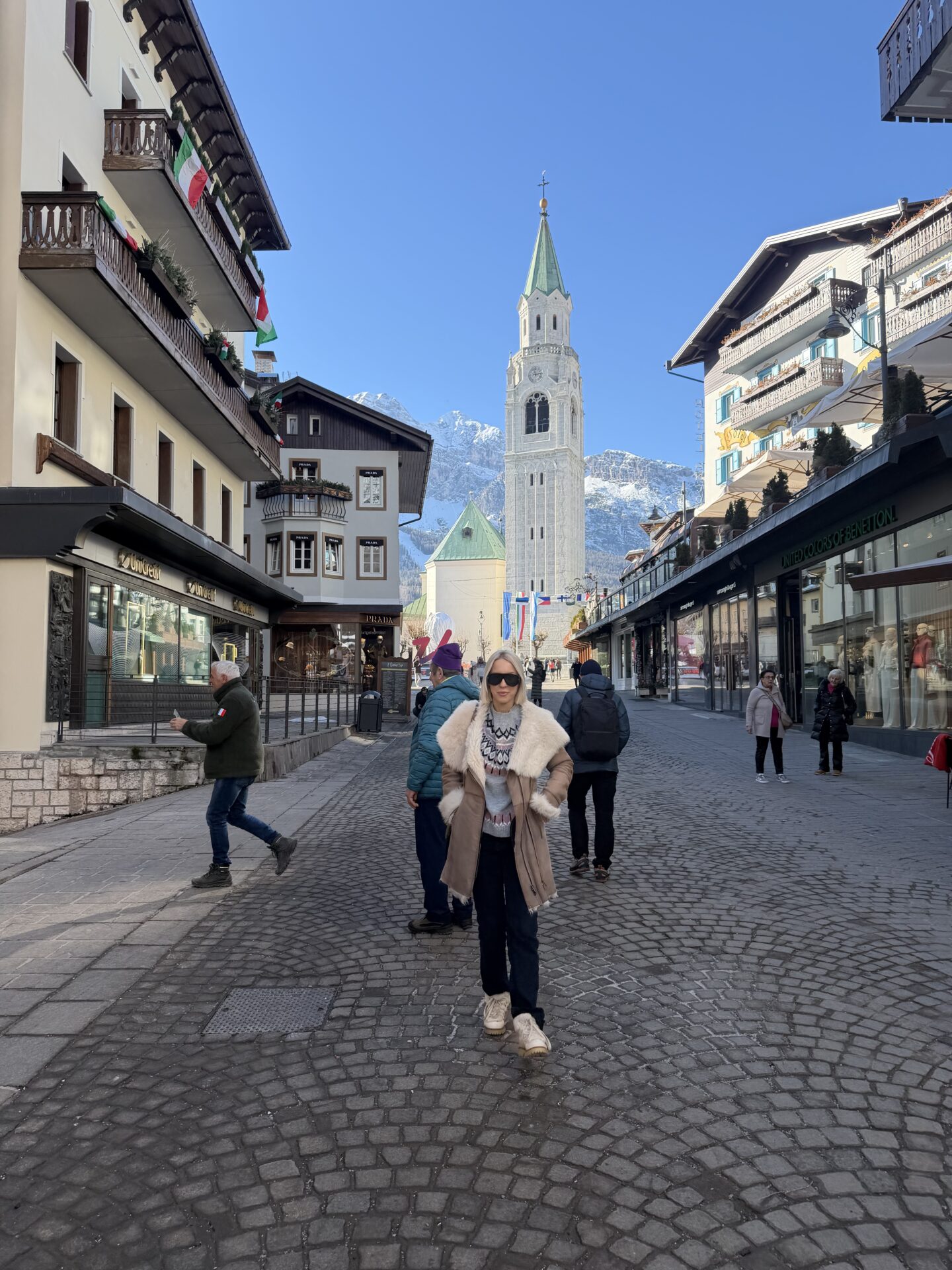
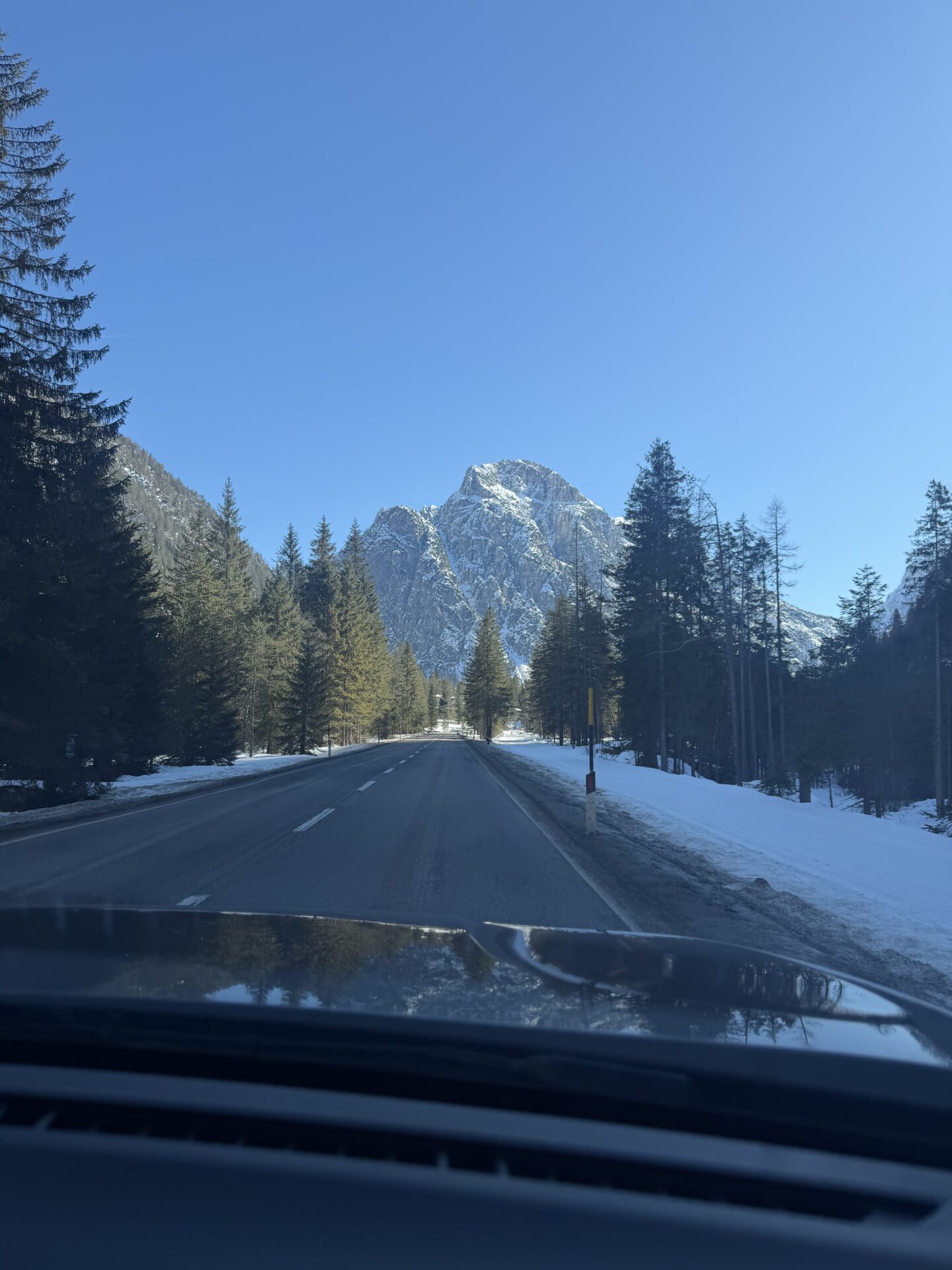
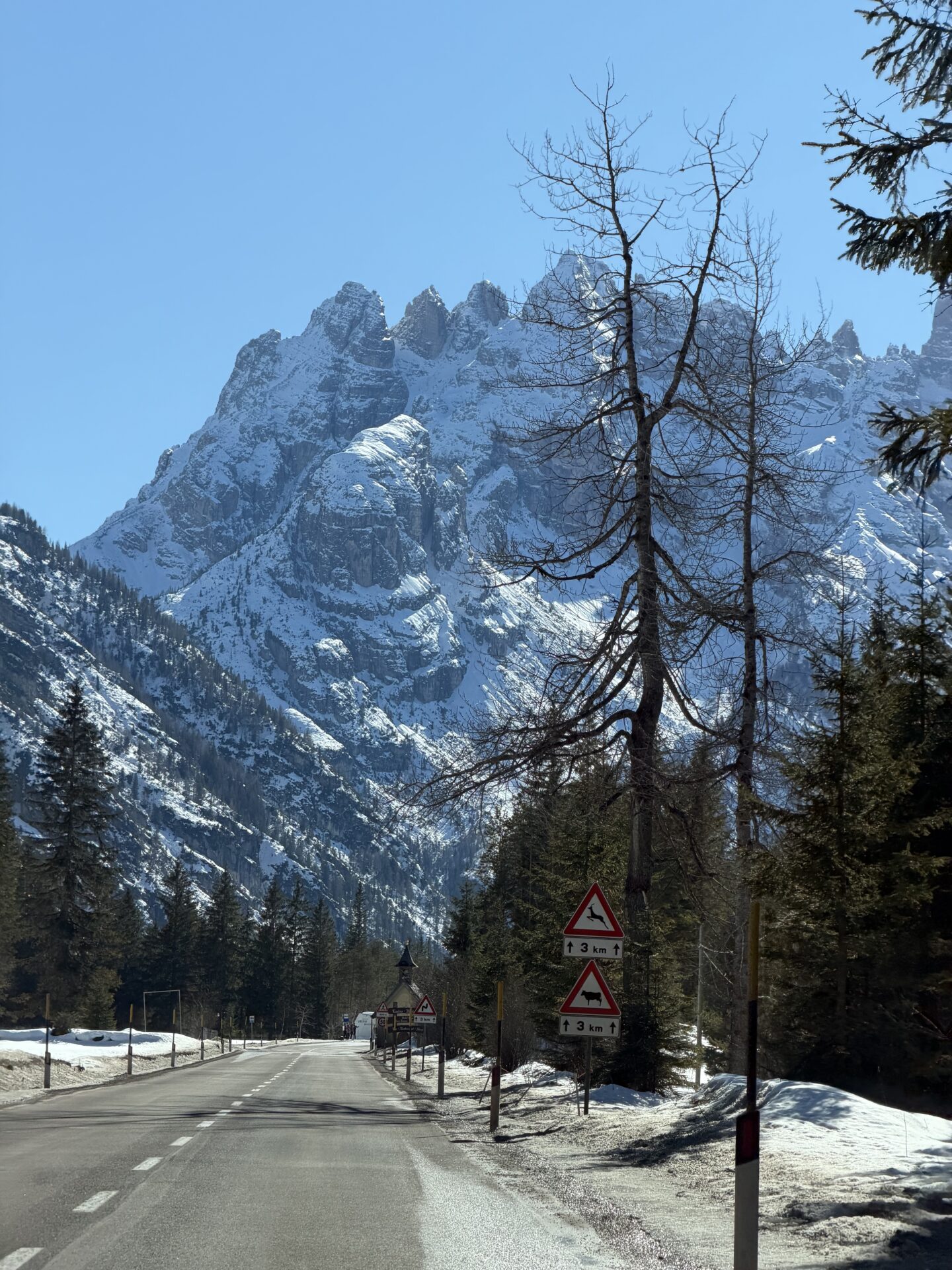
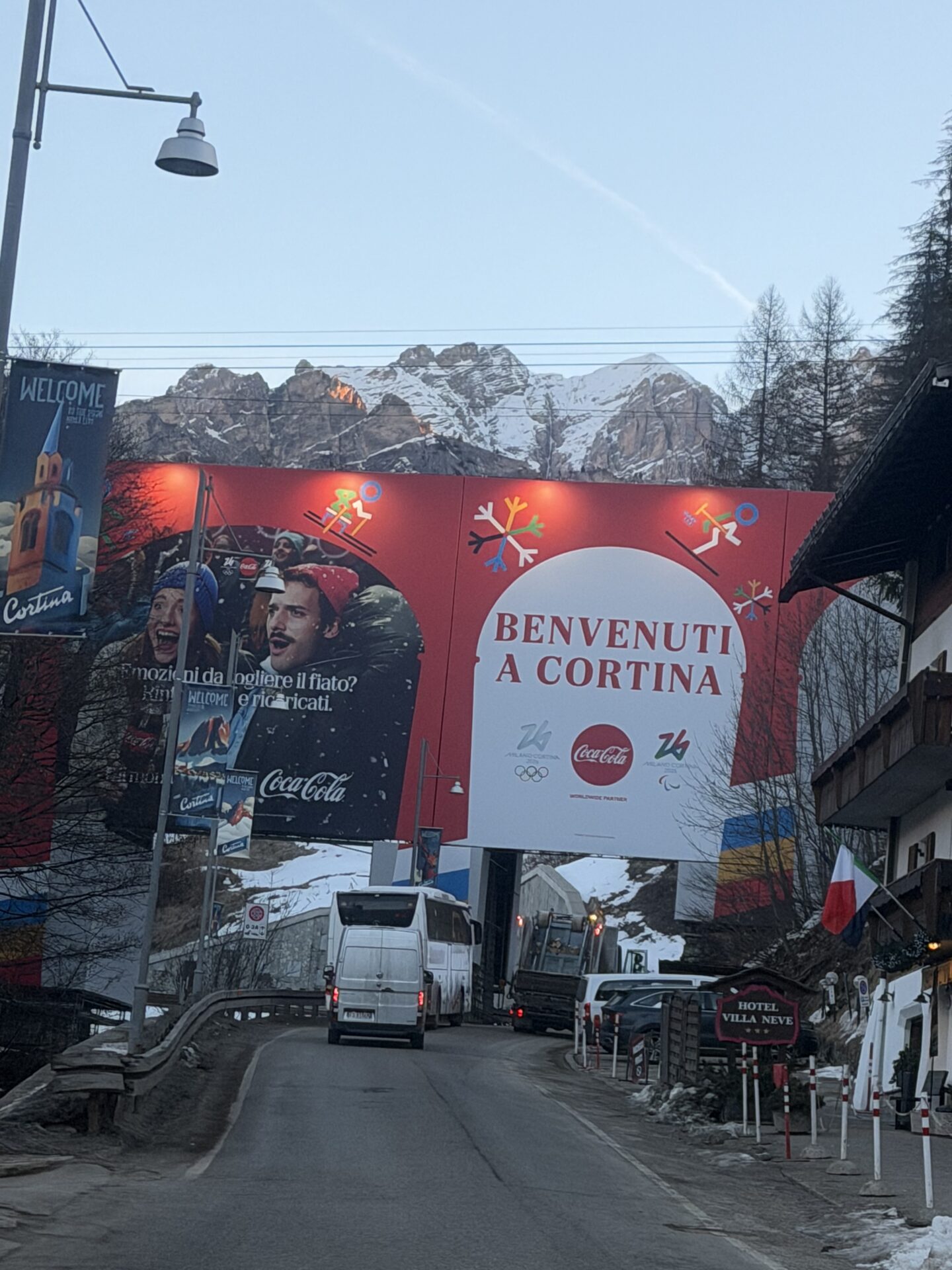
One of the highlights of our trip was driving to Cortina d’Ampezzo in Italy for a day.
The drive took about 2 hours and 40 minutes, with one toll through a mountain tunnel.
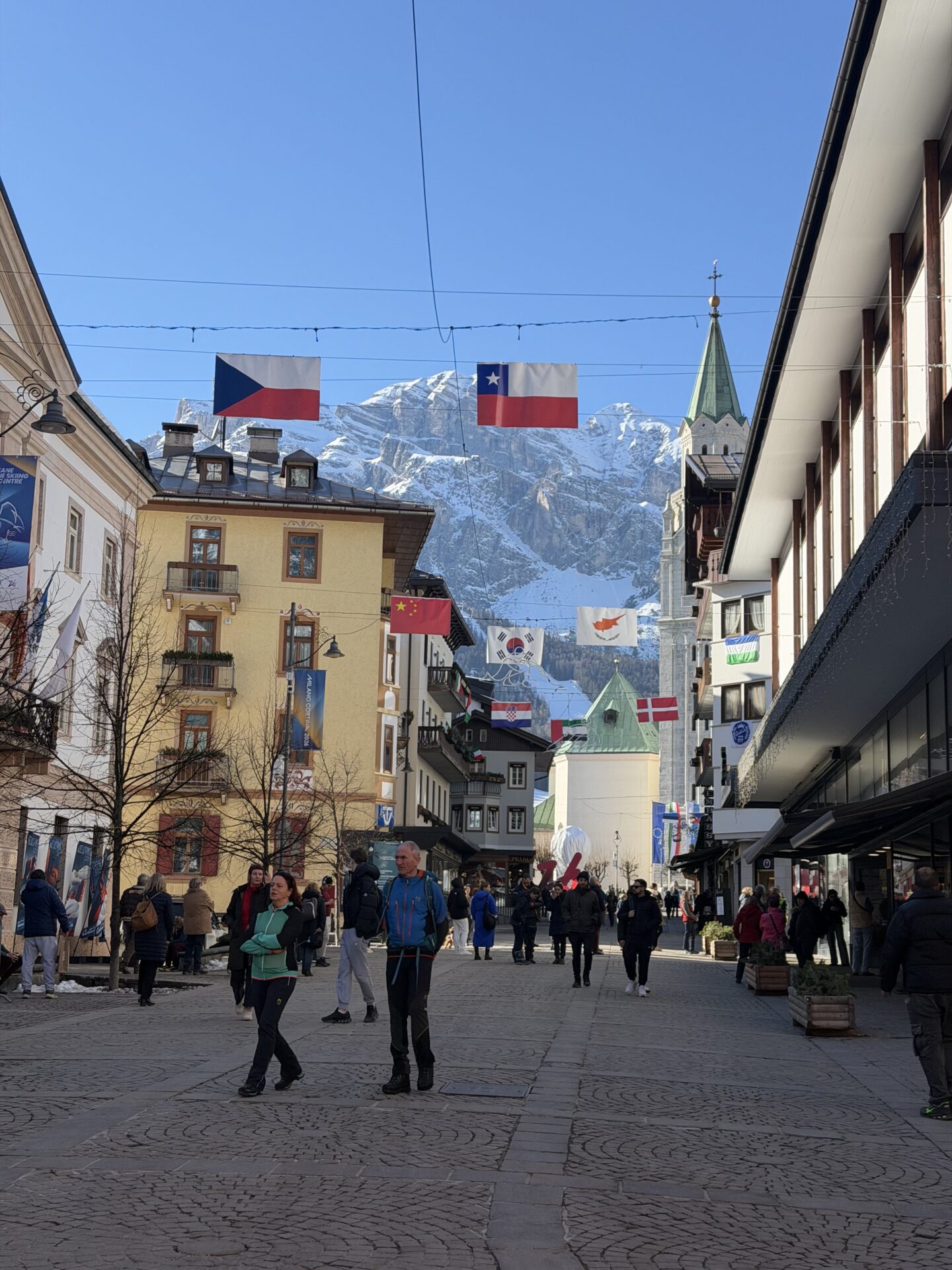
Cortina is absolutely stunning.
The town is incredibly stylish, luxurious, and surrounded by dramatic Dolomite mountains.
It is definitely more expensive though. At one restaurant we even had to pay €5 per person just to sit down for dinner (coperto).
But the shopping, architecture, and atmosphere were incredible.
It felt extremely boujee, elegant, and glamorous, and I would love to return to explore it more.
Driving Back to Munich
After our trip, we drove back to Munich Airport, which took about 4 hours and 40 minutes.
Driving through the Alps is beautiful, so the longer drive didn’t feel too bad.
One thing that was convenient: we were able to use credit cards everywhere during the trip.
What I Wish I Knew Before Visiting
• Snow conditions depend heavily on weather since the resort isn’t extremely high altitude
• The run grading system can be confusing
• Staying near a gondola makes a big difference
• Weekends are significantly busier
• Most of the energy happens during après ski on the mountain, not late at night in town
What I Recommend
• Start skiing early in the morning for the best snow
• Explore different lift bases to avoid crowds
• Take advantage of the ski service shops on the mountain
• Consider renting skis at the base to avoid carrying gear
• Plan a day trip to Cortina if you have a car
Final Thoughts
I’m glad I checked Kitzbühel off my Ikon Pass list, but I’m not sure I would rush back.
Maybe if I visited right after a big snowfall my opinion would change, but the town atmosphere didn’t fully make up for the skiing experience for me.
There are other European resorts I personally enjoyed more.
That said, Cortina completely won me over, and I would absolutely return there to spend more time exploring the mountains and town.
I love how you mentioned the train station being right next to the gondola! That’s such a convenient feature for skiers, especially when you’re trying to maximize your time on the slopes. The flexibility of having a car rental is also a great point for those wanting to explore outside the ski resort.
thank you!!
The full Kitzbühel review with the Cortina day trip comparison is exactly the kind of detailed trip report that cuts through the glossy destination marketing. The honest assessment of crowds during peak season versus the shoulder week options is genuinely useful for trip planning. The note about transport logistics from Munich and the ski storage situation at mid-mountain would have saved me a lot of time planning our own Alps trip last year.
Kitzbühel is one of those resorts where the village atmosphere is almost as important as the terrain — the combination of Hahnenkamm challenge and the old town character is hard to replicate in purpose-built ski destinations. The Cortina day trip comparison is a great addition; the contrast between Austrian and Italian Alpine culture in a single week is genuinely underrated.
Kitzbuhel has always been on my ski bucket list and this review finally pushed it to the top. Your honest take on the crowds and the Cortina day trip add-on is exactly what I needed. The combination of history, terrain variety, and apres-ski culture sounds unbeatable.
Kitzbühel is one of those destinations that justifies the hype once you actually ski the Streif area — the terrain variety is impressive for a single resort, and the apres-ski culture is genuinely unmatched. The Cortina day trip addition is a smart itinerary move; the contrast between Austrian and Italian alpine village vibes is worth the detour. Good note on booking the Hahnenkamm gondola early during peak weeks.
Kitzbühel really does have that special mix of challenging terrain and village atmosphere — the Hahnenkamm runs are legendary for a reason. Your Cortina day trip addition makes this feel like a really complete Austrian Alps itinerary.
Your honest assessment of Kitzbühel — acknowledging the premium price point while capturing what makes the experience genuinely special — is exactly what I look for in ski resort reviews. The detail about snow conditions in early versus peak season is particularly helpful for planning. Saving this for our Alps trip next winter.
Really detailed review of Kitzbühel — the comparison with Cortina is useful since both attract a similar crowd but have very different mountain characters. The point about off-piste accessibility versus groomed run quality is exactly what intermediate skiers need to weigh.
The honest take on Kitzbühel’s crowd levels versus its reputation is really useful for planning. The Hahnenkamm infrastructure is exceptional but the village gets genuinely crowded at peak season in a way that affects the experience significantly. The Cortina day trip idea is a great alternative for anyone who wants quieter slopes without sacrificing alpine scenery.
Loved this honest review of Kitzbühel — the Cortina day trip suggestion is the kind of insider tip that makes a trip genuinely memorable rather than just checking a destination off a list. The crowd and cost comparison with other Alpine resorts is really helpful for planning.
The Cortina comparison is useful context — Kitzbühel’s piste grooming and lift infrastructure generally edges out Cortina for committed skiers, but the après scene and mountain restaurant culture both have strong cases. The Hahnenkamm weekend timing note is an important planning flag.
Excellent breakdown of Is Kitzbühel Worth Visiting? My Full Ski Trip Review + Corti. Your insights are valuable — it’s clear you have real experience with this topic.
Wonderful travel guide — the level of detail here really helps with planning. Travel storytelling through short video is such a compelling format for audiences. Thanks for sharing!
Kitzbühel really is worth every bit of its reputation — the combination of ski culture and village charm is hard to match. Your review captures the texture beautifully. I put together a winter travel visual series after my Alps trip and used Nano Banana 3 to generate ski slope scene mockups for the header.
Kitzbühel being on the Ikon Pass but still having its own quirks that a guide needs to flag is useful — a lot of ski write-ups just assume pass access means the same experience everywhere. Adding the Cortina day trip angle gives this more value than the usual single-resort review.
This was a clear read on is kitzbühel worth visiting? my full ski trip review + cortina day trip. I appreciated blondyinsider is a travel and lifestyle blog that inspires readers to explore the world, embrace personal style, and live an adventurous, empowered life, because it gives readers something concrete to think about.